Tuesday, May 7, 2013

Celebrate Mother's Day with a Great Book

Mother's Day is coming up, and in addition to taking our moms to brunch or dinner (or being taken out by our own children) it's a good time to explore the joys and complexities of motherhood with an engrossing book. The WPL has books that address all kinds of topics related to motherhood, including adoption, balancing family life and career, being a lesbian mom, growing up American with a mom from a different culture, caring for aging moms, working to get your kid the best education possible, surrogacy, and more.

Here are a few books about motherhood and the experiences of individual moms - experiences that may be unique or that you may recognize from your own life. If any of these books interest you, place a hold in the catalog to reserve it or call the Reference Department at (508)-799-1655 ext. 3.


Fiction


The Joy Luck Club, by Amy Tan
The Joy Luck Club

Little Earthquakes, by Jennifer Weiner
Little Earthquakes

The Ten-Year Nap, by Meg Wolitzer
The Ten-Year Nap

The Accidental Mother, by Rowan Coleman
The Accidental Mother

Come Home, by Lisa Scottoline
Come Home

Mothers and Daughters, by Rae Meadows
Mothers and Daughters

Night Road, by Kristin Hannah
Night Road

Nonfiction


The New Don't Blame Mother: Mending the Mother-Daughter Relationship

Balance is a Crock, Sleep is for the Weak: An Indispensable Guide to Surviving Working Motherhood, by Amy Eschliman and Leigh Oshirak


Balance Is a Crock, Sleep Is for the Weak: An Indispensable Guide to Surviving Working Motherhood

Confessions of a Scary Mommy: An Honest and Irreverent Look at Motherhood: The Good, The Bad, and the Scary

When Did I Get Like This? : The Screamer, The Worrier, The Dinosaur-Chicken-Nugget-Buyer, and Other Mothers I Swore I'd Never Be, by Amy Wilson

When Did I Get Like This?: The Screamer, the Worrier, the Dinosaur-Chicken-Nugget-Buyer, and Other Mothers I Swore I'd Never Be

The Price of Motherhood: Why the Most Important Job in the World is Still the Least Valued

Sh*tty Mom: The Guide for Good-Enough Moms, by Laurie Kilmartin, Karen Moline, Alicia Ybarbo, Mary Ann Zoellner
Image of item

Memoirs and Biographies


Mom & Me & Mom, by Maya Angelou
Mom & Me & Mom

Blue Nights, by Joan Didion
Blue Nights

Riding Shotgun: Women Write About Their Mothers

The Source of the Spring: Mothers Through the Eyes of Women Writers

Hard Time & Nursery Rhymes: A Mother's Tales of Law and Disorder

It Hit Me Like a Ton of Bricks: A Memoir of a Mother and Daughter, by Catherine Lloyd Burns

It Hit Me Like a Ton of Bricks: A Memoir of a Mother and Daughter


Las Mamis: Favorite Latino Authors Remember Their Mothers, edited by Esmeralda Santiago and Joie Davidow
Las Mamis: Favorite Latino Authors Remember Their Mothers

Carrie and Me: A Mother-Daughter Love Story

Remembering the Music, Forgetting the Words: Travels with Mom in the Land of Dementia


A Singular Woman: The Untold Story of Barack Obama's Mother, by Janny Scott


A Singular Woman: The Untold Story of Barack Obama's Mother


Confessions of The Other Mother: Nonbiological Lesbian Moms Tell All, edited by Harlyn Aizley


Confessions of the Other Mother: Nonbiological Lesbian Moms Tell All!

Motherland: A Memoir, by Pamela Marin
Motherland: A Memoir


Tuesday, April 30, 2013

WPL Wins a MLA Public Relations Award: 1st Place in Social Media Category

          Rezarta Reso, Dorrie Karlin, Jillian Parson, Priya Subramanian, and Pingsheng Chen

Congratulations to the creative and hard working staff of the Worcester Public Library for winning the first place in social media category of Massachusetts Library Association (MLA) Public Relations Awards.  MLA presented the 21th biennial awards at the Association’s Annual Conference at Hyatt Regency in Cambridge, Massachusetts on April 25th, 2013.  Social media category winners were chosen by a panel of independent judges from the public relations, press, and library fields.  Evaluation criteria included creativity, functionality, and usage.

This is a biennial contest held by the Massachusetts Library Association, coordinated by their P.R. committee. We submitted an entry this year because we’re very proud of the work we’ve done this year with social media. Through the creation of an “e-group,” we’ve dramatically increased our online presence. We use Facebook as our hub, but we use a variety of other social media platforms, including Pinterest, Twitter, and GooglePlus, in order to reach as many patrons as possible and to ensure that everyone who wants to can access information about the library. We feel incredibly honored to have received this award!

The E-Group (Electronic Resources Group) is led by Pingsheng Chen, E-Resources Librarian with librarians selected from adult reference Priya Subramanian and Jillian Parson and from youth services, Dorrie Karlin and Rezarta Reso. 

Email Ping with any questions.

Sunday, April 28, 2013

Digital Tools for Genealogists

One of the gems of the Worcester Public Library is our Local History and Genealogy Collection.  Located on the third floor of the library this section features a wealth of resources to help our patrons pursue research in family history as well as the history of Worcester.  In addition to these physical resources the web tools listed below offer social, interactive assistance for genealogists.

Geni.com
 Geni.com is a genealogy social networking site.  The goal of this site is to create a global family tree of shared ancestors.  It functions as a family tree building service, allowing you to build off the work that other members have already completed.  Family members can use Geni to share information and keep in touch.  Geni also works as an organizational tool for family documents and photographs.  Basic membership is free and includes 1 GB of upload space.
Find out more about Geni by watching this introductory video.

FamilySearch Blog
FamilySearch is the database associated with the Family History Library, the world's largest collection of genealogical records.  What once functioned primarily as a database connecting users to records now offers many more services.  FamilySearch, like Geni, includes a family tree tool and the ability to upload and share family photos.  One feature of this site which you may initially overlook is the FamilySearch Blog.  This blog keeps readers up to date with information on FamilySearch as well as news about the wider world of genealogy research.

Pinterest.com
Pinterest is an image-based social networking site which allows users to create virtual pinboards or scrapbooks.  Images posted to this site are called pins and may be shared, repinned and liked by other users.  Because of its visual orientation Pinterest is ideal for sharing historical family photos.  It can also be used to organize bookmarks to genealogical websites and resources, instructional videos and event-planning ideas for things like family reunions.  WPL has utilized this tool to share photos related to library history on our Worcester Room Board.  Check out how other genealogists are using this tool:
For more information on using Pinterest for family history:
Cyndislist.com
Cyndi's List is a curated index of websites relating to genealogy.  Of particular note is the category "Social Networking and Genealogy."  This page features of list of articles on how new social media can be used in the context of genealogical research.  It also features examples of how they are being used.  This list is updated daily so it's a good site to keep in your bookmarks if you want to stay up to date on what's new in genealogy on the web.

Ancestry Insider
For users of Ancestry.com and FamilySearch (which should be all modern genealogists) this blog is a must read.  The blogger attempts to independently and without bias critique and report on the two giants of online genealogy research.  Posts are timely and informative and will help to keep researchers abreast of the ever-constant changes which come with online research.

Here at WPL we are constantly researching and trying out new technologies in order to better serve and educate our patrons.  If you're interested in learning more about genealogy on the web you may consider attending next month's work shop with Joy Hennig, Web 2.0 for Genealogists (May 23rd and 28th).

More genealogy resources:
Online Databases - Genealogy
Local History and Genealogy Resources


Thursday, April 25, 2013

Boston Strong: updates and support


Sunday, April 21, 2013

Reading for the Environment on Earth Day

The first time Earth Day was celebrated was on April 22, 1970; many people consider that day the birthday of the modern environmental movement. Since 1970, Earth Day has been an occasion for people to think about human impact on the planet and learn about conservation. For those who want to know more about climate change, learn about green practices, understand the effects of pollution, and more, the Worcester Public Library has many books that can help you get educated in true Earth Day tradition.

The list below has a few examples, but the library has many more that could satisfy your curiosity! To find more, search the catalog or ask a librarian for suggestions.

Nonfiction

Silent Spring
Rachel Carson's Silent Spring, first published in 1962, awakened the public to the danger posed by pesticides like DDT. This book was one of the first to launch many people into deep awareness and concern for the environment.


An Inconvenient Truth: The Planetary Emergency of Global Warming and What We Can Do About It

Al Gore's An Inconvenient Truth, in which he presents evidence that global warming is already having serious effects, became quite famous partly because many readers found it accessible and even entertaining while still being informative.


Ocean's End Travels Through Endangered Seas
A Great Aridness: Climate Change and the Future of the American Southwest
Global warming may seem like a distant problem, but Colin Woodward's first-hand account, Ocean's End: Travels Through Endangered Seas, shows how it is having major effects in some regions. 


Forecast: The Consequences of Climate Change, from the Amazon to the Arctic, from Darfur to Napa Valley


The American Southwest is a unique environment, with a relatively small water supply. William DeBuys presents an image of what it could be like in the future due to human overpopulation and overuse of resources in A Great Aridness: Climate Change and the Future of the American Southwest.


Stephen Faris suggests that the effects of climate change wouldn't just be environmental - it could affect human health, politics, economies, and social customs - in Forecast: The Consequences of Climate Change, from the Amazon to the Arctic, from Darfur to Napa Valley.   


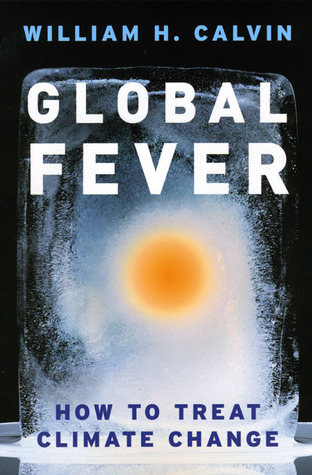
If climate change is a disease, William H. Calvin has a cure: he presents clean technology prescriptions in Global Fever: How to Treat Climate Change.
Atmosphere: Air Pollution and Its Effects


After learning about the dangers the planet faces, you may want to know what you can do to protect vital resources. For some ideas, check out The Water Book: A Users Guide to Understanding, Protecting, and Preserving Earth's Most Precious Resource.


Global Fever: How to Treat Climate Change


If climate change is a disease, William H. Calvin has a cure: he presents clean technology prescriptions in Global Fever: How to Treat Climate Change.


Atmosphere: Air Pollution and Its Effects


For readers interested in knowing where air pollution comes from and what can be done about it, Dana Desonie's book, Atmosphere: Air Pollution and Its Effects, is informative.


Image of item


Derrick Jensen and George Draffan show how deforestation has changed history and how it can again in Strangely Like War: The Global Assault on Forests.

Blue Planet Run: The Race to Provide Safe Drinking Water to the WorldObtaining safe drinking water is a challenge for people all over the world.  Rick Smolan and Jennifer Erwitt tell fascinating  stories of how people have done it in Blue Planet Run: The Race to Provide Safe Drinking Water to the World.


Wednesday, March 20, 2013

2013 Book Club Picks

Have you been wishing you could converse with friends about the fascinating books you're reading? Joining a book club is a great way to explore the themes and personalities you encounter in a great book. The WPL Book Club meets on the third Tuesday of each month at 7 o'clock in the 3rd floor ellipse. Anyone is welcome to join us. Come to one meeting or come to all of them! In 2013 we're trying out different genres and styles. So far we've read Michael Chabon's The Amazing Adventures of Kavalier and Clay and Ayana Mathis's The Twelve Tribes of Hattie.

Check out the books we'll be reading for each month this year:

March
Hilary Mantel's Man Booker Prize-winning novel Wolf Hall brings the court the English King Henry VIII alive. She tells the story of the intrigue, politics, and religious turmoil of this Tudor king's reign from the perspective of Thomas Cromwell, a minister to the king. Henry VIII is famous for his part in separating England from the Catholic church in the English Reformation and for his six marriages. As we read about Cromwell's machinations, we can imagine what it must have been like to be a 16th-century Englishman or -woman.


April
Massachusetts author Anita Shreve is a master at evoking New England culture and atmosphere. In The Weight of Water, a journalist delves deep into the mystery surrounding a nineteenth-century murder, while the bonds of her own family are strained during their stay on the island of Smuttynose, off the coast of New Hampshire and Maine, where the murder took place.


May
We'll jump into science fiction with a novel that won both the Hugo and Nebula Awards. In Blackout, characters travel back in time from the Oxford of the year 2060 to the England of World War II, where and when they face air raids and other hazards of wartime. The time travelers started out as historians on fact-finding missions, but they soon find themselves questioning their own rightful places in history.


June
Many readers know Joan Didion for her recent memoirs, The Year of Magical Thinking and Blue Nights, but she earned acclaim partly for nonfiction essays like those in this volume. We Tell Ourselves Stories In Order to Live is a collection containing the essays that originally comprised her first seven nonfiction volumes. These essays reflect Didion's travels and reporting, examining American cultural life across several decades starting in the '60s. Check back with us in June to see which essays to concentrate on for the meeting.


July
Summer is a great time to sample some short stories, and in July we'll revisit fairy tales that may seem familiar - except that those in Ruby Slippers, Golden Tears are retold with a twist. Dragons, Sleeping Beauty, witches, and more fantastical beings appear in this collection. The way these authors interpret the old stories may surprise you. Check back with us in July to see which stories to concentrate on for the meeting.


August
A widely admired Canadian writer, Alice Munro is known for tales that evoke rural, small-town life, often in southern Ontario. The stories in Dear Life feature women who feel trapped and conflicted, men who grieve or feel driven to dominate. Munro's characters are in the midst of the small-scale action of their lives or the brink of a decision that will change everything. Check back with us in August to see which stories to concentrate on for the meeting.


September

Marie Arana grew up straddling two cultures. In American Chica: Two Worlds, One Childhood, she tells the story of her family: her father, descended from Peruvian aristocrats who works as an engineer, and her mother, a product of the American west who can ride horses and play the violin. At times their marriage seems like a tug-of-war between two identities; Arana's book tells of her journey to find herself.


October
Originally published in 1959, Shirley Jackson's The Haunting of Hill House is considered a progenitor of the modern horror genre. The book has the classic elements: a haunted house with a past, a group of people staying in the house who find themselves terrorized, a young woman who may be possessed. October is prime time to be unnerved.


November
In November we celebrate Veteran's Day, so it's a good time to read Tim O'Brien's collection of stories of men in a Vietnam War platoon, The Things They Carried.  These soldiers went from an America that gave them little choice about participating in the war to a Vietnam where one could never tell where an enemy might be. O'Brien makes readers see the blood and gore of wartime - and its at-times viscous unreality.


December
The book club will take a break during December. Enjoy the holidays!

Ready to get started? Place holds through the C/W MARS catalog. Remember, if the WPL doesn't have enough copies of a book, you can always request a copy from another library in our system by placing a hold.

You can find book reviews and links to other helpful resources if you join our book club online, on Goodreads.

You can RSVP to the meetings on our event calendar, but feel free to attend even if you don't RSVP. We look forward to seeing you at the meetings!

Wednesday, March 13, 2013

WPL hosts Technology Open House to Promote Digital Literacy on March 21


Worcester Public Library to Host: Computer and Technology Open House:

 “Learn How to Do One Thing Better Online”


Worcester, MA- March 12, 2013: The Worcester Public Library has joined forces with the national public service Connect2Compete campaign, “Everyone On” to promote the importance of digital literacy skills. Library event launch will take place on Thursday, March 21 from 10:00 a.m. - 4:00 p.m. with a “Computer and Technology Open House” at the Main library. Event is free and open to the public. 

Open Lab: Those who are interested in learning how to do “one thing better online” will have access to one-on-one assistance with a librarian in the computer lab. Learning topics include: setting up email, Facebook, Twitter, Pinterest, resume writing, job application, Microsoft Word and more. 

 Technology Petting Zoo: Patrons are encouraged to stop in to explore various digital devices, ereaders, tablets, etc. and also to bring in their own devices to ask questions.

 The key message of “Everyone On” campaign is to encourage people who are limited or non-Internet users, to learn how to do “one thing better online”. Public libraries are integral to the success of this effort because of their demonstrated commitment to providing free access to the Internet as well as access to technology and training.

In partnership with the Ad Council, “Everyone On” is powered by Connect2Compete, a national nonprofit organization bringing together leaders from communities, the private sector, and leading foundations.
 

Sunday, February 24, 2013

Planning and Running a Book Club


Participating in a book club can be a great way to enrich your reading experience. Discussions with fellow readers lead us to understand books in new ways and make connections between literature and our own lives. Often, we build great friendships with other book club members too.


To get the most out of the book club experience, it helps to put a little planning into it ahead of time. There are a lot of things to think about, but doing so will ensure that your club members have a satisfying experience that makes them look forward to each meeting.

Here are some things you'll want to consider:

  • Choice of book: The fun novel that helps you unwind after work or that you take to the beach may not be meaty enough for an engaging book club discussion. You may want to choose a book with complicated characters, ethical dilemmas, or social issues so that you can have a lively conversation.
  • How the talk will flow: To keep people coming back for more, you want your club's participants to feel free to discuss controversial issues in an atmosphere of mutual respect. Depending on your club's members, you may want to set ground rules so that everyone gets a chance to speak. Every book club is different; some like to have a free-flowing discussion and others structure the conversation around a set of reflection questions.
  • Venue and meeting frequency: Making sure everyone is on the same page about club logistics will help prevent scheduling conflicts. Do you want to meet at someone's home? If so, will that person furnish snacks or will the meeting be a potluck? Or, will you meet at a restaurant, bar, coffee shop, or the library? Who will be responsible for making these choices and communicating them to the other members?
Getting a successful book club going and keeping it going can be a challenge, but luckily there are plenty of resources to help you at every step of the way.


Websites

Starting a Book Club,” from ilovelibraries.org.  This site has many suggestions and links to other helpful resources.

Ten Tips for Starting and Running a Successful Book Club,” by Rachel Jacobsohn

Starting and Running a Book Club,” from Book-Clubs-Resource.com

Reading Group Guides has suggested discussion questions for many books available

LitLovers is a website with tips on running meetings, leading discussions, and more.  There are also reading guides for many books with suggested discussion questions.


Find more reading-related links on the Books and Publishers page of our website.
Books
The reading group handbook : everything you need to know, from choosing members to leading discussions Rachel W. Jacobsohn (WPL Call Number: 374.22 J17r)

The complete idiot's guide to starting a reading group byPatrick Sauer. (WPL Call Number: 374.22 S255c)

What to read : the essential guide for reading group members and other book lovers Mickey Pearlman. (WPL Call Number: 011.7 P359w.  There is also a revised and updated 1999 edition available by placing a hold through the C/W MARS catalog.)

Running book discussion groups : a how-to-do-it manual Lauren Zina John. (WPL Call Number: REF 374.22 JOHN)

The New York Public Library guide to reading groups Rollene Saal. (WPL Call Number: REF 374.22 SAAL)

Good books lately : the one-stop resource for book groups and other greedy readers Ellen Moore and Kira Stevens. (Available by placing a hold through the C/W MARS catalog.)

The book group book : a thoughtful guide to forming and enjoying a stimulating book discussion group Edited by Ellen Slezak ; foreword by Margaret Atwood. (Available by placing a hold through the C/W MARS catalog.)

You can always ask a librarian at the Worcester Public Library for help with choosing a book for your club to read. We can point you to some websites and other resources to help you channel your interests into a book club pick. Have a fruitful - and fun - conversation!