Monday, June 16, 2014

June 2014 Staff Book Recommendations

June 23, 2014

J.M.W. Turner 
By Peter Ackroyd 

J.M.W. Turner is a short biography in Ackroyd’s Brief Lives series. J.M.W. (Joseph Mallord William) Turner was born to a barber and butcher in London in 1775 and went on, in a remarkably long, varied, and busy career to become a master artist who used light and atmosphere as no one had before him. 

Ackroyd chronicles Turner’s life in a linear fashion and sheds light on Turner’s private and familial struggles. Turner’s mother Mary, a butcher, was known for her temper and was eventually confined for life in an asylum while Turner was still a young man. It was a topic he never spoke about and it may have had a bearing on Turner’s decision to not marry. He preferred to live with a partner and had some relationships – rather stable ones – during his life. He had two daughters out of wedlock. His father William became Turner’s confidant and assistant in the business of Turner’s studio and gallery. Ackroyd stresses the importance of Turner’s travels in England, Scotland, and Europe, particularly Venice, in his development as an artist and his romantic and spiritual views about nature and the classical views of nature. Turner composed thousands of drawings in his sketchbooks, some of which became iconic paintings or watercolors and etchings. 

The Peabody Essex Museum in Salem currently has a major exhibit, Turner & the Sea, which contains oils, watercolors, and his sketches and studies. It was his use of light and atmospheric effects that made his reputation and this is very obvious looking at his work. His personality seems to have been gruff – he was secretive, never spoke very much, and had a reputation as a very, very parsimonious and commercially-oriented person when it came to his work. However, his talent was undeniable. 

Ackroyd’s biography is – and I used it as such before visiting the exhibit – a good jumping off point to learn something about what made Turner tick and what his life was about. It is also an excellent base for more detailed biographies about Turner. 

 --Bill

June 16, 2014

An Untamed State
By Roxane Gay


The national conversation on violence against women came to a head recently after the tragic murder of six people in Isla Vista, California. News media blew up with stories of the murderer's misogynist manifesto, and thousands contributed their personal stories of sexual assault and harassment on Twitter with the hashtag #yesallwomen. This happened soon after Congress announced plans to crack down on sexual assault in colleges. Statistics show that one in five women are assaulted during their college career. Sexual assault and sex trafficking is an even bigger problem in the developing world. Women's stories need to be told. The unique, heartbreaking novel An Untamed State is one example of such a story, although it is also much more than that. 

Mirielle is a complex main character and narrator. She was raised in America to successful Haitian parents. Her father was obsessed with excellence and very demanding of his children, especially Mirielle, the youngest. After she and her siblings are grown, her parents move back to Haiti and start a construction company. They live in a lavish mansion in a place of abject poverty. Mirielle stays behind in the States and studies hard to become an immigration lawyer. She is a strong, sometimes difficult woman who does not expect the fairy tale that her life becomes when she falls in love and becomes pregnant. 

The novel begins with Mirielle's adduction in front of her father's Haitian estate. Kidnapping is common in Haiti, and her father immediately hires a negotiator and expects she will be treated well until she is ransomed. Mirielle fights the kidnappers as hard as she can, refusing to cooperate with their dehumanizing demands, and they repay her with shockingly brutal rape and abuse. Her time in their cage is prolonged by her father’s proud refusal to pay. I will say that much of this novel is difficult to read. However, it is also a testament to the human spirit and a compelling, moving story that will keep you up all night. Mirielle's experience as a survivor in Miami, rebuilding her sense of self and family, is told with startling detail. Highly recommended for all readers, especially those interested in contemporary global issues and immigrant experiences, PTSD or mental health. 

 --Katie

June 9, 2014


John Green’s The Fault in Our Stars: Book v. Movie

“Whenever you read a cancer booklet or website or whatever, they always list depression among the side effects of cancer. But, in fact, depression is not a side effect of cancer. Depression is a side effect of dying.”

Spoilers Ahead!!

For the last few months any time a patron under the age of 18 has approached the reference desk I’ve been pretty well able to guess what it is they’re looking for. The Fault in Our Stars, John Green’s 2012 novel, has recently seen resurging popularity with the release of the film adaptation. Green was already a Printz award-winning author at the time of TFIOS’s publication, but this novel was a transformative step forward for the young adult writer. We’ve been thrilled that the novel and movie have inspired young people to read.

The book is the story of Hazel Grace Lancaster, a sixteen year old girl living with stage four cancer. Her prognosis is terminal, but the medication she’s on has so far succeeded in extending her life beyond doctors’ expectations. Hazel lives a mostly isolated life before attending a cancer support group where she meets her great love, Augustus Waters, a cancer survivor who’s in remission at the novel’s opening. The really important thing to remember about this book is that it spurns the traditional tropes of “sick-lit.” Hazel’s experience confirms that the Hollywood myth of the strong and noble cancer kid suffering through terminal illness with a smile is fallacious.


Green tells an honest, funny story about two precocious teens living with pain, never flinching away from revealing the indignities of sickness. Although the film is very true to the book in terms of plot details, it felt to me that the soul of the novel was lost in translation. Green shows us the daily realities of Hazel’s sickness: hooking up to a breathing machine every night, cheeks puffed up as a side effect of her medication, the constant, aching awareness of her lungs struggling to fill. The movie, perhaps unavoidably, glosses over these details. We don’t get to watch Hazel scrolling through the Facebook page of Gus’s ex-girlfriend, who died from a brain tumor which transformed her personality. We also don’t see Hazel’s reaction to finding Gus, incoherent and weakened, lying in a pool of his own urine during the late days of his cancer. We don’t hear support group leader, Patrick, read the growing list of those members who have passed away. Instead the movie, perhaps necessarily because of its format, succumbs to the glossy, Hollywood sad story structure that the book confronts and spurns.

Not to be all whiny or anything. The film certainly had its bright spots. Laura Dern as Hazel’s mother was absolutely wonderful. The confrontation of Peter Van Houten and the Anne Frank House scene were both spot on. Watching Hazel struggle up the stairs, carrying her oxygen tank on her back, and hearing the words of Anne Frank, another child who struggled with the pain and cruelties of the world, was the shining point of the movie. In the end, I guess I’ll conclude as I usually do when talking about a book-to-film adaptation: make sure you read the book first! The movie is good, but the book might change your life.


--Chelsea


June 2, 2014

 
How the Hot Dog Found Its Bun

By Josh Chetwynd


How the Hot Dog Found Its Bun: Accidental Discoveries and Unexpected Inspiartions That Shape What We Eat and Drink is one long title for a book that is relatively short but very much fun to read. Written by Josh Chetwynd with illustrations by David Cole Wheeler, this book is a collection of the origins of common food and drink items (and also kitchen utensils) we consume and often take for granted, from buffalo wings, to popsicles, to Kool-Aid, to paper towels and many, many more products. Chetwynd’s book is divided into categories such as Starters and Small Plates, Main Courses, Desserts, Candies and Snacks, Additives and Extras, Drinks, and Kitchen Inventions and Innovations. His anecdotes are comical, weird and serious – often all at once.

For example, the tale of tabasco sauce, also the subject of a recent Sixty Minutes segment, is an interesting enterprise that rose from the ashes of the Civil War. The McIlhenny family had lost all their land and crops on Avery Island in the Civil War except for some Mexican capsicum peppers. When McIlhenny returned to Avery he took the peppers, mixed them in salt from his island salt mines, added vinegar, combined them in an old cologne bottle and liked the result. He wanted to call it “Petite Anse Sauce”, since Avery was also known as Petite Anse, but after objections to using the family property’s name, he settled on “E. McIlhenny Tabasco Pepper Sauce”.


The idea for the name twinkies, by bakery manager James Dewar, came from seeing a billboard advertisement in St. Louis for Twinkle Toe Shoes, which he shortened to “make it a little zippier for the kids”. They were originally stuffed with strawberries so were available only seasonally. He switched to bananas since they could be found year round but rationing in World War II forced Hostess to switch to the vanilla flavored filling familiar today. The Twinkie segment does refer to the infamous “Twinkie Defense” used in the San Francisco Moscone and Milk murders in 1978. So, if you occasionally enjoy browsing this type of background information about common products ,sit back and grab a Twinkie - but maybe not a Graham cracker. You’ll have to look at this book to find out why!


--Bill


Tuesday, June 10, 2014

Credo Reference


Have you tried using Credo Reference for your research needs? Credo is an online reference library providing full-text access to over 500 reference books in various subjects from several publishers. Whatever your research topic, you will find information here to help you. Need a definition? An Image? Need help pronouncing a difficult word? Or need a famous quotation to kick off your research paper? Use this database to find quick answers to these questions. 


Use basic or advanced keyword search to find articles, images and maps. Reference materials such as dictionaries, thesauri and encyclopedias cover subject from Art, Business, Geography and History to Science, Technology and Zoology. 


Click on Find a Book to a complete list of title that are available. Use Find Topic Pages to get an overview on any topic. Over 10,000 topic pages are available to get you started on any topic. Once your research is completed, you can print, email, share and export your findings so they will be available for you at a later date. 

To access the database, go to www.worcpublib.org and click on online databases in the left column. Click on Credo Reference under Quick Access. A valid Worcester Public Library card is needed.

Monday, June 9, 2014

Worcester Public Schools Summer Reading Lists


Summer is here! While school is out many of you will have summer reading requirements.

We've tried to make the process of checking out your required summer reading books a little easier by making lists in our online catalog. You can see what is available for your grade and put a hold on any title that is currently checked out.

Grades 7-12 have recommended reading lists; students must choose three of these, or any other three books. Click here for the fiction for grades 7-8 and click here for the non-fiction for grades 7-8.

Click here for all titles for grades 9-12.

The lists for other grades are much larger, with many options, and can be found at the Worcester Public Schools' website here.

Summer reading for school can count as summer reading for the library's program. Register here and log your reading throughout the summer to win prizes! Stop by the library for more information.

Saturday, June 7, 2014

3 Ways to Organize Family History Research Online

If you’ve attempted genealogical research, even just for a few hours, you probably realize that documents, sticky notes, and ancestor charts quickly transform into an incomprehensible mass of paper on top of your desk.  Even if you are saving all your records digitally, organizing the information can still be a challenge.  Luckily there are websites which offer free family tree building services and data storage.  They’re easy to use and immensely helpful.  Today we’ll highlight a few of those sites.


FamilySearch is the online presence of the Family History Library, the largest genealogical collection in the world.  This website is free, easy to use, and offers a variety of neat services for users.  The first feature is the family tree, which you can view in the traditional style or as a fan chart (a visually striking representation of family lineage illustrated left).  For each family member users may enter name, vital information including birth, death and marriage dates, a “life sketch” or brief biography and various relationship types.  Please note that this service does not allow users to enter same-sex partners.  I find this to be quite limiting as well as an unnecessary and troubling bias.  Some individuals may wish to use an alternative tree-building service such as Geni (highlighted below).
Additionally FamilySearch allows users to submit “Memories” including photos, stories and documents.  Please note that anything uploaded or submitted on FamilySearch is viewable by all its users.


Geni (short for genealogy) is another fun, free, easy to use website for keeping track of your research.  You can sign up for a free account, or upgrade for more access to other users’ trees and research materials.  Unlike FamilySearch, Geni only allows for one type of family tree, the traditional tree structure.  However, Geni does allow for same-sex relationships on your tree and, in my opinion, is a little more intuitive to use than FamilySearch’s version.  One important note: make sure that your Flash Player is up to date.  Although Geni will redirect you to an HTML5 version of the tree-builder, the Flash version is much easier to use and nicer looking.
Like FamilySearch, Geni also allows you to upload photos.  Again, please be aware that anything you upload to the website is viewable by other users.


While Flickr doesn’t allow us to build family trees or record stories, it does give users one Terabyte of space for uploading photos.  These could be photos of our ancestors, family heirlooms, documents, anything really.  Flickr is very user friendly and allows you to choose the license type and privacy settings for each item or group of items that you upload.  That means that you can restrict your photos to friends, family or yourself, or you could make them open to all.  You’re able to organize photos into albums as well as by tag, offering users a simple way to catalog their family archives. 

If you’re interested in finding out more about genealogical research at WPL, check out our website or come to the third floor of the library.


Monday, June 2, 2014

Science Fiction Book Talk


Coming up on June 16 at 11 AM here at the Main Library, we have a Sci-Fi Book Talk. Come learn about recommended science fiction titles, from classics to new books. Whether you are already a sci-fi reader or would like to get started, we would love to see you! We will have copies of many books available to check out. If you have a favorite you'd like to share, please bring it along!


Before the talk, take a look at some of the books we will be discussing. We have created one list of Sci-Fi and one of Sci-Fi Genre Mashups, books that are mainstream with sci-fi elements like clones or time travel. If you don't consider yourself a sci-fi reader but are looking for something new and different, this later list is for you. These lists are in our catalog so you can see what is currently available or place a hold if you'd like to pick it up later.

The book lists are also posted as boards on the library's Pinterest page!


Sunday, June 1, 2014

From the Children's Room

June 1, 2014

As we head into June, we are ready to Fizz, Boom, Read! We have many exciting, science-filled programs on the docket for the summer, which we’ll be kicking off on Saturday, June 14th with a day filled with festivities. In the morning, help us plant our garden on Library Lane (the picture is from last year). In the afternoon, we’ll Go for the Stars during a hands-on, multimedia space program. All are welcome!

Be sure to sign up to participate in summer reading while you’re here, and keep an eye on our calendar for fun, free activities! We are also proud to announce our partnership with the Worcester Public Schools and their mobile summer meal program. After school lets out at the end of June, they will be bringing free lunches to the Main Library every day at 1 pm for ages 0-17. Meals will also be provided at our branches. The start date and complete schedule will be available mid-June. We look forward to serving the whole child this summer, body and soul!


May 1, 2014

May means art in the library, and we are looking forward to the big exhibit put on by Worcester Public Schools and featuring work by students from all over the city. To celebrate their achievements, we will also have art in the Children’s Room. On May 2nd, we will have our third Artist@Work, sculptor Michael Alfano, doing a hands-on demonstration. Everyone can craft on May 9th, when we will make something special for the mothers in our lives, and on May 23rd, when we will celebrate spring and (fingers crossed) warm weather. Literature can be art, and the week of May 12th is Children’s Book Week. Librarians will choose some of their favorite books for random readings; we hope you’ll be here to share them with us!

We are gearing up for summer, when we will FIZZ, BOOM, READ from June 9 through August 16, but be sure to stop by in May for our regularly scheduled programs. These include Baby Time, PJ storytime, Read to Nemo, Videogaming, Baby Massage and Yoga, Icky Sticky, Acting Out African Folktales, Family Films, and Lego Club. Although storytimes are out of session, we will have a drop-in storytime for ages 5 and under on Thursday mornings at 10 am. All programs are free and open to the public. For more details, including ages, times, and registration details, keep an eye on our calendar and on Facebook.

Tuesday, May 27, 2014

May 2014 Staff Book Recommendations

May 27, 2014

Theresa Bernstein: A Century in Art
Edited by Gail Levin


This book was published in conjunction with two Bernstein exhibits at college galleries in New York City. Bernstein’ art career spanned each decade of the twentieth century and she was a contemporary of Edward Hopper and John Sloan. Much of the history of American art is contained in the history of America’s art colonies and my first contact with her work was through an exhibit of her and her husband, William Meyerowitz, also a painter, at the Cape Ann Historical Museum in Gloucester, MA, in 2006. Gail Levin, the editor, has written other books on American artists Lee Krasner and Edward Hopper. This book is divided chronologically with section contributions by Levin’s seminar graduate students and visiting scholars.

Bernstein’s career was extensive, spanning most of the 20th century. She passed away in 2012 at an age estimated to be 111. Bernstein’s life as an artist reflected the social mores of the times and Levin feels that without the bias against women artists that she encountered, she would be a more recognizable artistic presence to the American public. Levin’s book contains very detailed chapters about Bernstein’s life, her influences, and the social aspects of her paintings. Her relationship with Meyerowitz, and their Jewish background, is fundamental to understanding Bernstein as both a person and an artist. His death is a very poignant moment in Levin’s book. Each section of the book is thoroughly documented with footnotes and also contains numerous high quality reproductions from different periods of her artistic growth.

Theresa Bernstein: A Century in Art provides a fascinating glimpse into the long life of an important but neglected regional and national artist.

--Bill

May 19, 2014

The Marriage Bureau for Rich People
By Farahad Zama

In this charming book, Mr. Ali, a retiree and resident of Vizag, India, starts a matchmaking business on his front porch. Himself a Moslem, he finds matches for local Moslem, Hindu and Christian people looking for a spouse, either for themselves, or, more commonly, for a family member. His wife is concerned how hard he’s working and finds him an assistant in Aruna, a young Hindu woman who passes their house one day. Aruna’s desire for an advanced degree has been stymied due to her family’s financial troubles. And without a dowry it is unlikely she could ever get married herself. While the Bureau is successful, the Alis worry about their son, who is an activist for the poor and stands up against corrupt government.

More of an introduction to the culture and traditions of southern India than a plot-driven novel, the reader learns about the Hindu caste system and how it affects marriageability, how a prospective bride or groom – and his or her family – is evaluated for acceptability, and what is the de rigueur cuisine for a South Indian Moslem wedding.

An easy read, the book shows an India in transition, where some families look upon a “love-marriage” as a great shame and scandal, while in others, young women are attending graduate school and becoming engineers.

A dictionary of Hindi terms is available in the back of the book but it would have been more useful in the front. Further explanation of Indian traditions, especially in contrast to Western ones, can be found at the end in the form of Mrs. Ali’s English-class homework essays. The author, who is also from Vizag, has written several sequels to The Marriage Bureau for Rich People; see also The Wedding Wallah, Mrs. Ali’s Road to Happiness, and Many Conditions of Love.

--Melody

May 12, 2014

Death Sworn
By Leah Cypess

Leah Cypess’s new YA series opener introduces Ileni, a young sorceress who is gradually and irretrievably losing her magic. Because the Elders of her community now view her as disposable, Ileni is assigned to live among a secret society of assassins, posing as their new magic instructor. Her true purpose is to secretly investigate the mysterious deaths of two former teachers. Ileni struggles to maintain her role as instructor, preserve the magic she has left, uncover the fate of her deceased predecessors—all while fearing for her life and surrounded by expertly trained killers. To complicate matters, Ileni begins to fall for her one protector among the assassins, Sorin. Even while her feelings for Sorin grow, she knows that she can’t trust him. The longer she remains in the caves of the assassins, the weaker she becomes. She begins to suspect that she is a piece in a game being played by the Master of the Assassins.

This sort of dystopian/fantasy/forbidden romance tale feels familiar. Many readers of Veronica Roth’s Divergent series will find parallels. If you have a reader who’s reluctant to read any new books after Hunger Games and Divergent, give this one a try. If you’re tired of para-romance dystopian survival coming of age stories…maybe pass over this title.

--Chelsea

Monday, May 19, 2014

Need Grant Funds? Try Foundations Directory Online

The library subscribes to dozens of online databases to fulfill our patrons’ research needs.  Whether you’re writing a research paper, repairing your car, or pricing an antique discovered at a yard sale, we’ve got you covered.  The WPL Reference Blog will be highlighting some of our most unique and useful databases starting with the Foundations Directory Online.


If you’re a member of a non-profit group or an individual searching for grant money to fund a project, the Foundations Directory is an excellent place to start.  The library subscribes to two versions of the Directory: Professional and Individual.  The professional directory gives users access to Grantmakers, companies, grants and 990 forms.  Search in any of these categories or across all four using the Powersearch feature.  Visual tools allow users to map the geographic disbursement of grants from specific companies or chart disbursement by subject area or recipient type.  Grantmaker profiles include contact information, restrictions, application requirements and more.

The individual directory works similarly to the professional version.  Search thousands of top Grantmaker profiles and discover foundations that fund:

  • Scholarships, fellowships, loans, internships
  • Students and graduates of specific schools
  • Arts and cultural support
  • Awards, prizes and grants by nomination
  • Interna0tional students
  • Employees/families of employees at specific companies
  • Research and professional support
  • General welfare and special needs.
Search tip: when using Advanced Search, click on “view index” beneath each search field to browse the search terms and phrases associated with the subject you’re interested in.

Come by the Worcester Public Library to get started searching the Foundations Directory today!  The Foundations Directory Online is only available from computers inside the library.

Monday, May 12, 2014

Hoopla: Movies, TV, Music and Audiobooks

Entertainment at your library, no waiting!


DivergentI think we can all agree that libraries are amazing.  Free access to books, movies, magazines, music, databases—what’s not to love?  Well, waiting for your holds isn’t exactly exhilarating.  Perhaps you’re one of the 246 people waiting for a copy of Divergent by Veronica Roth.  Did you know that the library has a new subscription service that gives access to movies, TV shows, music and audiobooks without any waiting?  All three audiobooks from the Divergent series are available as free downloads to anyone with a Worcester Public Library Card! 

Hoopla is like Netflix for libraries—only it provides more than just streaming movies.  All you need is a valid Worcester Public Library Card and you can stream movies and listen to books and music using a computer, tablet or smartphone.  Simply visit the library’s webpage, click on “Digital Downloads” and “Hoopla” to get started.  You will need to create a log on.  To use the service from your mobile device download the Hoopla app from iTunes or Google Play.

Check out some of the popular titles available right now on Hoopla: 


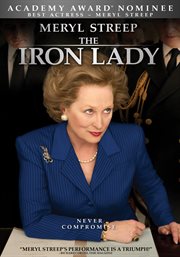
The Iron Lady

Saturday, May 3, 2014

Access Consumer Reports Magazine Online!


Did you know that a Worcester Public Library card provides you with free online access to the Consumer Reports magazine? Use this great resources to find ratings on everyday products, search full -text articles from the monthly issues and research the buying guide.

Getting ready to host an outdoor summer party? Check out the ratings on Gas Grills and Lawn Movers to get your yard in perfect shape!

Interested in buying an eReaders? Need a new Cell Phone? There is something of interest here for everyone! Click on the image below to browse inside the most recent May 2014 issue.....

 May 2014 issue

To access:
Go to the library's website at www.worcpublib.org
Click on Online Databases on the left column
Under Quick Access, click on EBSCO databases
Click on ConsumerReports.org
(Worcester Public Library card is required for access.)

Consumer Reports is just one of many online databases and resources made available though the library.  Feel free to contact us with any questions or comments.

Monday, April 28, 2014

April 2014 Staff Book Recommendations

April 28, 2014

Bloody Jack: Being an account of the curious adventures of Mary "Jacky" Faber, Ship's Boy
By L.A. Meyer


It’s 1803 and Jacky Faber, orphan and London street urchin, volunteers to be a “ship’s boy” on a British Royal Navy ship to escape the violence and poverty of being homeless. It’s an exciting life, fighting pirates on the high seas and visiting exotic ports. Jacky loves learning the ropes (literally) and sails, and climbing to the crow’s nest with his mates. He especially likes being fed every day. The only problem is Jacky is actually a girl, Mary, and she has to hide her gender for fear of being put off the ship. Her secret must be maintained even from her beloved James Emerson Fletcher, another ship’s boy.


Bloody Jack is the first in a series of adventure novels about Jacky, stories that take her from Boston to the Mississippi, and even to China. Along the way she comes in contact with sailors, spies, slaves, sunken treasure, and sovereigns. But the most relevant “s” in that list is Survivor. Jacky , and her virtue ,survive endless brushes with death: by drowning, by hanging, by runaway kite, by cannonball, by jealous rivals, and in battle. Jacky is clever, intrepid and philosophical. She survives it all - but fate seems to ever be keeping her from Jaimy.

The Bloody Jack books are well-researched. For those readers who are interested, there’re all sorts of facts about sailing ships, life in the early 19th century, and the Napoleonic Wars. Jacky is a delightful and complex persona, and, in fact, nearly all the characters have depth. The author skillfully weaves Jacky’s story in with the most important historical events of her time. Although Jacky is a small child when her story begins, these books are not recommended for younger readers due to some adult-themed material. However, middle-school-aged through adult readers will find themselves on the edge of their seats in anticipation of Jacky’s next escapade.

The series comprises these individual novels, all of which can be read on their own:

As good as these books are, the audio versions are even better. Actress Katherine Kellgren is the voice of every character: young and old, aristocrat and slum-dweller, American teacher and Irish bard, English lord and Boston Brahmin, Spaniard tattooist and French general; she is the master of all accents and both genders, and the full panoply of human emotions. Bloody Jack books and CDs are available at the WPL or through Interlibrary Loan. On the web, see: http://www.jackyfaber.com/.

--Melody

April 14, 2013

American Mirror: The Life and Art of Norman Rockwell
By Deborah Solomon

American Mirror is a very interesting and detailed look at Norman Rockwell’s artistic development and career. Solomon’s book is controversial due to her consistent and puzzling hunt for clues to prove that Rockwell was a closet homosexual which are “stretched” so far as to, in the end, prove to be comical and call into question Solomon’s motives for doing so. She describes Rockwell’s childhood in upper Manhattan when Norman started copying battleships from cigarette trading cards. In 1905, Rockwell, 11 years old, won first prize in a New York Herald drawing contest. The family moved to Mamaroneck where he attended high school while also taking classes at the New York School of Art and the National Academy of Art. Later, in 1911, he enrolled in the Arts Student League of New York.

It is important to note that Rockwell grew up during the golden years of the Age of Illustration in America. Howard Pyle was his idol. However, Rockwell also always felt torn between illustration and fine art, even as the borders between the two began to blur (ironic, given that very recently Sotheby’s announced that an auction of a Rockwell painting of the Boston Red Sox, “The Rookie”, might bring $20 - $30 million dollars!). However, the starkly commercial aspects of magazine illustration always nagged at him.


Rockwell’s career spans nearly a century of American art. He did not change his particular style of painting and survived criticism and the vacillating tastes of both the public, art critics, and artists themselves. Not many know of the devastating fire in his studio in Vermont where many paintings and drawings were forever lost. He also had three marriages, all to teachers. He supported war efforts with his art but was strongly against the Vietnam War. He did purport to admire abstract art and even did some work in that area. However, in the end, his lasting legacies are his Saturday Evening Post covers and depictions of small town rural America.

Solomon’s book is well worth reading. It is an in depth account of an iconic American artist, although it is more of a socially than artistically critical appraisal of Rockwell’s years. Her book also contains a little bonus for any readers with a Worcester “bent”: there are two interesting local connections, one on page 215, and another on page 389 – I won’t say more than that. Check them out. In the end, one thing is certain: there won’t be another Norman Rockwell and I think many of us miss his great talent and humor.

--Bill

April 7, 2014

The Martian
By Andy Weir

“A human being should be able to change a diaper, plan an invasion, butcher a hog, conn a ship, design a building, write a sonnet, balance accounts, build a wall, set a bone, comfort the dying, take orders, give orders, cooperate, act alone, solve equations, analyze a new problem, pitch manure, program a computer, cook a tasty meal, fight efficiently, die gallantly. Specialization is for insects.”--Robert A. Heinlein

In Andy Weir’s first novel, The Martian, astronaut Mark Watney doesn’t slaughter any pigs, but he shows his self-sufficiency in many other ways. After a freak accident leaves him nearly dead on the Martian surface, his teammates abandon their habitat and what they believe to be his lost body, and begin the long journey back to Earth.

Watney needs to figure out how to survive for four years until the next Mars mission from Earth arrives, and how to get to their planned landing spot, thousands of kilometers away across the mountainous and cratered Martian surface. But he only has food and water designed to support a team of six for 30 days. The temperature outside the habitat averages 80 degrees below zero, the atmosphere is almost completely made up of unbreathable carbon dioxide, and the accident that almost killed him destroyed the communication equipment so he can’t call NASA for help.

Every astronaut on his team was an expert in at least two disciplines; Watney is a mechanical engineer and a botanist. His cleverness while trying to survive is reminiscent of the old TV show MacGyver, where the title character comes up with astonishing but perfectly reasonable solutions to what appears to be intractable problems.

Most of the story is told from his point of view, until an alert NASA technician sees evidence of change in images of the Martian surface at the location of the aborted mission. Mission Control wants to help but time and physics is working against them…

-- Melody

Saturday, April 26, 2014

Teen Zone

June 1, 2014

June 9th begins our Summer Reading Program: Spark A Reaction! You can sign up online to log time spent reading and attending library programs this summer, and win prizes for doing so. For every 500 minutes you read, you can win a prize, with a chance to win an IPad Mini at the end of the program!
 
Teens (and other YA lit lovers) can join us at the WPL to kick off this year's Summer Reading Program with a visit from author Julie Berry, who recently published her newest YA novel, All The Truth That's in Me. Julie will hold a book talk followed by a writing workshop on Tuesday, June 17th from 5 - 7pm at the Main Library. Check out a copy of one of her books before the event!
  

May 1, 2014


Teens, join us for one of our programs this May! On May 28th from 6-7:30pm in the Children’s Program Room our Spilled Ink writing group will be joined by poet and educator Jennifer Freed. Jennifer will conduct a workshop for teen writers and poets focusing on the John Green novel The Fault in Our Stars. She will also answer your questions about life as a writer and give advice on becoming one. If you are interested in improving your skills, please join us for this free event! Also, don’t forget to check the Teen Event Calendar to see all of our other free programs this May!

Tuesday, April 8, 2014

"True Detective" Reading List

Your friendly WPL librarians don't only read books; we also love TV shows like HBO's "True Detective"!


Now that the show is over, if you (like us) find yourself anxious for more from Rust and Marty, we have some books you might enjoy. Click here for a list of 16 titles; you will find call number information and can place a hold with your library card if it's unavailable. The list includes Southern fiction for those most attracted to the setting; hard boiled detective stories for those interested in mysteries; tales of the macabre and magical; and philosophy books similar to Rust's own views.

Highlights: 


"True Detective" is one of the few TV dramas written entirely by one person, Nic Pizzolatto. Before he wrote the episodes, he wrote the 2010 novel Galveston, whose protagonist could be easily  mistaken for a civilian version of Rust. The novel takes place in Texas and Louisiana, and includes just as much murder and mayhem as the show.


The disturbing Biblical imagery from "True Detective" is reminiscent of British romantic poet and artist William Blake. This collection is a great introduction to his work and includes many images.

This Chilean author said that he would probably have been a homicide detective if he didn't become a writer. He blends magical realism, government corruption, love and mystery in The Skating Rink, originally published in Spanish in 1993.

Tuesday, April 1, 2014

From the Children's Room

Hooray for Spring! April brings to mind many of our favorite things here in the Children’s Room -- National Poetry Month, National Library Week, April Vacation, Earth Day, and El Día de Los Niños/El Día de los Libros. On a more serious note, it is also Holocaust Remembrance Month. We’ll be celebrating and reflecting in turn, and we would love to have you join us.

Celebrate art with Saori weaver Bayda Asbridge on April 5th or with graphic novelist Jamie Buckmaster on April 11th and April 25th. Celebrate diverse heritages with storyteller Laura Partridge on April 12th or during our day-long festival for “El Día” on April 30th. Celebrate the Earth during school vacation with the DPW&P on April 22nd (Earth Day!), a marigold planting on April 23rd, and our second annual Rustic Petting Zoo on April 24th.
 
We celebrate the library every day, but during National Library Week, April 13-19, we will have a special photo booth, and we want you to help us spread the word (psst...the word is read!) Drop by and have your picture taken!
 
All programs are free and open to the public. For more details, including ages, times, and registration details, keep an eye on our calendar and on Facebook. We hope to see you in April!