Monday, June 30, 2025

New Releases - July Edition

Check out these highly anticipated new releases featuring fiction and nonfiction titles. Click on the title to request a copy or get your name on the waitlist. Don’t forget to watch for more featured releases next month!

FICTION

Salt Bones by Jennifer Givhan.  Set on the edge of California's Salton Sea, the latest novel from poet and novelist Givhan (River Woman, River Demon) is hard-to-put-down literary suspense about families living through the unexplained generational disappearances of their daughters. The sister of Malamar "Mal" Veracruz was one such disappearance, and it tore their family apart. Now, 20 years later, Mal begins to have dreams of a horse-headed woman, blurring the lines between reality and the supernatural. Shortly after, Mal's own teenage daughter goes missing. Mal is determined to find her daughter before it's too late, but to do so requires digging up the secrets in her close community, her family, and even her own past. Steeped in the Mexican and Indigenous folklore of the shapeshifter La Siguanaba, the novel deftly creates an atmosphere creeping with dread, plus unexpected twists and family drama. Givhan perfectly balances the supernatural with human themes of grief and love. VERDICT A timely novel that deals with the treatment of Latina women. For fans of character-driven suspense and the magical realism of Isabel Allende, Silvia Moreno-Garcia, and Victor LaValle.—Mara Shatat.  Copyright 2025 Library Journal.

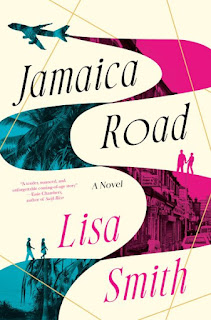
Jamaica Road by Lisa Smith.  Two young people navigate their personal lives and social turmoil in Thatcher-era England. When Daphne, the narrator of Smith’s debut novel, meets a new boy named Connie at the South London secondary school she attends, it isn’t exactly love at first sight. Connie, 12, has recently moved to England from Jamaica with his mother, Althea; Daphne, a London native with a Jamaican mother, isn’t quite sure what to make of him. But the two eventually become friends, and Connie tells Daphne that he and his mother are “nuh land”—in England illegally. Daphne’s mother, Alma, welcomes Connie, allowing him to spend time at their crowded house when Althea’s abusive partner, Tobias, is in a bad mood. Daphne helps Connie adjust to life in London, while dealing with a family problem of her own: She has tracked down her absent father. Meanwhile, both characters are forced to deal with racist taunts and attacks, and Daphne finds herself interested in a white boy with both a crush on her and a virulently racist brother. Smith’s novel covers 12 years in the lives of the two families, beginning in 1981, shortly after the New Cross house fire that killed 13 Black people and led to that year’s Brixton riot, continuing through 1985, when another riot rocked Brixton, and concluding in 1993.Smith does an amazing job detailing the atmosphere of Thatcher’s England and the immigrant experience. Copyright Kirkus 2025 Kirkus/BPI Communications. All rights reserved.


A Resistance of Witches by Morgan Ryan.  Lydia Polk is a rising star at the Royal Academy of Witches, thanks to her powerful magic and her privileged position as apprentice to the head of the academy. British witches have traditionally stayed under the radar. However, the threat of Hitler forces them to make a key alliance with Churchill and pledge their magic to the defense of Britain. The resulting shake-up at the academy makes Lydia reevaluate everything in her life, especially key relationships with her mentor, her friends, and her estranged mother. Lydia's abilities make her the ideal person to track down magical artifacts such as the Grimorium Bellum, and she is determined to find it before the Nazis can. A cat-and-mouse game of betrayal and lies leads to an explosive chase for the dangerous artifact. Lydia will need the help of new allies Rebecca and Henry to navigate the perils of occupied France, where there are enemies at every turn. The exploration of Lydia's complicated relationship with her mother adds depth to the novel. VERDICT Ryan debuts with this alt-Britain historical fantasy that is an enjoyable read.—Laurel Bliss.  Copyright 2025 Library Journal.

NONFICTION

The CIA Book Club: The Secret Mission to Win the Cold War With Forbidden Literature by Charlie English.  Vivid history of a CIA-funded program to introduce subversive literature to Eastern Europe during the Soviet bloc era. British author English’s book opens with an image of a simple-looking book, computer scientists on the cover, seemingly a technical manual. Had Polish security agents opened it, however, they would have discovered a copy of George Orwell’s 1984, smuggled into the country from Paris. The French capital served as an entrepĂ´t for books funded by the CIA, which, brought to Warsaw and other Polish cities by travelers to the West during the brief thaw following Stalin’s death, were circulated via a “system of covert lending.”. . . Eventually the book smugglers became more daring, publishing samizdat editions through a carefully coordinated series of safe rooms scattered across the country. English celebrates homegrown heroes such as Miroslaw Chojecki, trained as a physicist, who had been arrested 43 times by March 1980 but kept it up all the same. Romanian-born George Minden, also honored, concocted a series of ploys to get books and money inside the Iron Curtain, including, daringly, simply mailing banned literature to recipients chosen at random from the phone book. The program was highly effective; as English notes, “By 1962 at least 500 organizations were sending books on the CIA’s behalf.” By the program’s end, thousands of books had been circulated, to the gratitude of their readers, one of whom exalted, “We read poetry and literature. It showed us that there are likeminded people who are above nationality, who we can empathize with, who admire beauty, who admire virtue.” A well-crafted book about books—and spooks, skullduggery, and a time when ideas mattered. Copyright Kirkus 2025

Monopoly X: How Top-secret World War II Operations Used the Game of Monopoly to Help Allied Pows Escape, Conceal Spies, and Send Secret Codes by Philip E. Orbanes.  In this thrilling account, game historian Orbanes (Tortured Cardboard) revisits a little-remembered episode of WWII when the Allies concealed POW escape kits inside Monopoly game sets distributed by the Red Cross. British military intelligence first came up with the scheme, employing Waddington Ltd., a maker of games and playing cards, to reconstruct Monopoly boxes to hold lockpicks, tiny saws and compasses, maps printed on silk, fake identification papers, and Reichsmarks. With cinematic flair, Orbanes narrates the clandestine meetings between spies that led to the false game sets’ development and later adoption by the U.S., along the way touching on many fascinating historical tangents. . . The author also describes a daring escape utilizing the false game set undertaken by two Allied prisoners at Colditz Castle near the Baltic Sea. Throughout, Orbanes intriguingly surfaces other ways in which games, especially Monopoly, were used for Allied spycraft. (The Monopoly game board was the cypher used to decode a warning that Stalin had spies in the White House.) While some of the stylishly written scenes are clearly speculative, it’s all so gripping that readers won’t mind suspending a bit of disbelief. Copyright 2025 Publishers Weekly.
 
Shade: The Promise of a Forgotten Natural Resource by Sam Bloch.  Hiding from the heat. Excessive heat kills more people every year than floods, hurricanes, and tornadoes combined. The solution to this international concern, says environmental journalist Bloch, is a simple one: more shade. But simple doesn’t mean easy. Putting even a small dent in the amount of heat absorbed by the earth involves a multinational commitment to complex changes in the way we design not only cities but also neighborhoods, public spaces, and homes. Bloch begins each chapter with a story capturing various ways that lack of shade affects segments of the world’s population, including passengers at bus stops in Los Angeles, travelers to desert oases, and residents of big-city high-rises, all seeking relief from the heat. The challenges are many: Homeowners want windows for light, property developers find it cheaper to rely on air conditioning to cool buildings, and city planners have a hard time justifying the cost of barriers and shade trees in public spaces. Ideas to reduce excessive heat range from planting trees to brightening clouds to solar-radiation management to using space shades and other tactics to reduce the amount of sunlight the earth absorbs. The simplest option is also the most obvious. As Bloch writes, “It’s understandable that Americans have forgotten how sweet shade can be. As air-conditioning has become the default method of cooling down, the shade tree has disappeared from the lexicon….There is still no technology known to man that cools the outdoors as effectively as a tree.” . . . A thoroughly documented and thought-provoking book, certain to spark attention and discussion. Copyright Kirkus 2025.


Tuesday, June 24, 2025

Naming Library Spaces: The Banx Room

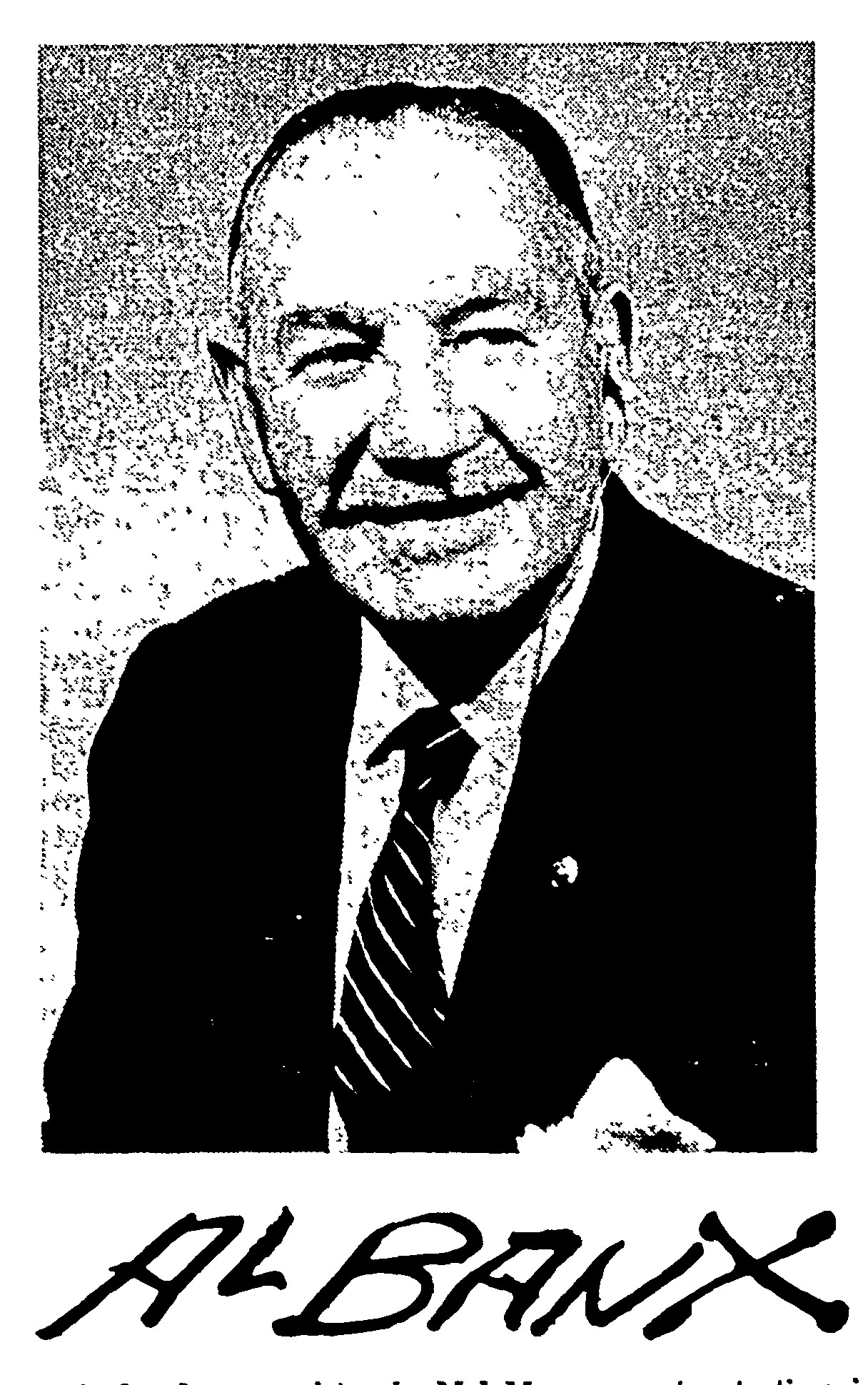
We previously introduced you to the origins of the Saxe Room so today's blog post is about our smaller meeting room at the Main Library, the Banx Room. Named after the beloved Worcester cartoonist, James Albert Banks, he was more commonly known to old-time newspaper readers by his pseudonym, "Al Banx." 

Al Banx

James Albert Banks was born in Boston on April 6 or 7, 1900 (several genealogical documents conflict on the exact date) to Michael Banks and Mary (Scott) Banks. Banks served as a private in the 75th Company, Sixth Regiment of U.S. Marine Corps in Europe during WWI and was honorably discharged in 1919. He then received vocational training under the Veterans Bureau at the School of Practical Art in Boston, which was followed by a year of working in the art department of the Boston Globe, before he ended up working for the Worcester newspapers, where he used the name, "Al Banx" for his cartoons. 

The first Al Banx cartoon appeared in the Worcester Evening Gazette on February 12, 1923. Al Banx cartoons covered a wide range of life in Worcester and New England. He frequently drew cartoons about sports, as well as cartoons about daily life, politics, and newsworthy events such as historic floods and courthouse drama.

"That High School Basketball Battle on Friday Night Should be a Thriller," Worcester Evening Gazette, February 12, 1923
In addition to drawing cartoons and occasionally leading classes on the subject, Banks was involved in a variety of local community, social, and veteran groups. He was a member of the Aletheia Grotto, a masonic organization; the Gen. Charles Devens Post of the American Legion; Worcester Detachment, Marine Corps League; Massachusetts 2nd Division Association; St. Luke's Episcopal Church; honorary member of the Yankee Division Veterans Association; a trustee of the City of Worcester's World War Memorial; and more. He also frequently chaired or attended community events and even served as a guest of honor, cartoonist, or toastmaster for many of them. The Worcester Evening Gazette noted in his May 2, 1967 obituary that his favorite honor was being named "'commodore' of the Kelley Square Yacht Club, a name he gave to habitues of the Hotel Vernon in Kelley Square in the Thirties."

The mayor and other prominent men of Worcester feted Banks in advance of his July 1940 wedding to Miss K. Pauline Snow. Mayor Bennett named the cartoonist Worcester's "Ambassador of Good Will" according to the July 2, 1940 issue of the Worcester Evening Gazette. Banks and his wife later had a son, Albert Snow Banks, in March 1942.

"Banx is Named as 'Ambassador,'" Worcester Evening Gazette, July 2, 1940

Banks served in the Intelligence Section, Headquarters Co., 21st Regiment of the Massachusetts State Guard during World War II in support of their recruitment efforts. He was later promoted to staff sergeant because "Sergeant Banks had done more to establish the State Guard in Worcester than any other individual" (Worcester Telegram, March 4, 1943). Furthermore, starting in 1942, Banks wrote a weekly column supporting the troops overseas, "Banx to the Yanks," which also appeared as a radio show on WTAG. The Worcester Evening Gazette published his final "Banx to the Yanks" column on November 24, 1945.

"Guardians of Our Commonwealth," Worcester Evening Gazette, June 2, 1942

"Banx Weekly Letter to Men in Service," Worcester Evening Gazette, December 12, 1942

After the conclusion of the war, Banks continued as a cartoonist for the Worcester Telegram and the Worcester Evening Gazette. He was one of 30 cartoonists who took part in a transcontinental group tour of 8 Air Force bases in a week throughout the country in 1951 (Worcester Sunday Telegram, October 14, 1951). In 1959, the Worcester Lodge of Elks named him "Newspaperman of the Year" (Worcester Telegram, October 8, 1959) and he continued to receive accolades from organizations even after his death.

James Albert Banks died unexpectedly in his sleep at the age of 67 on May 2, 1967. Tributes poured in from the Worcester-area community, including from friends and colleagues from the Worcester Telegram, the Worcester Evening Gazette, and Yankee Magazine; the many politicians and athletes who Banks featured in his works; and residents of Worcester who loved his cartoons. Banks had worked for the Worcester newspapers for 44 years.
"These Were Characters, Mascots Al Banx Created," Worcester Evening Gazette, May 2, 1967

Several hundred mourners attended the funeral at All Saints Episcopal Church in Worcester on May 4, 1967 and he was buried at the Worcester Memorial Park in Paxton. 

"Everybody's Banx by Al Banx and His Friends," Worcester Evening Gazette, May 22, 1967

Worcester's community continued to pay tribute to their beloved local cartoonist. His cartoons were exhibited at the Worcester Art Museum in September 1967 and a memorial window dedicated to Banks was installed at St. Luke's Episcopal Church. The imagery on the window featured sketches from the Bible as well as cartoon characters created by Banks. 

In 1974, Worcester Public Library's library board of directors approved a proposal from the Friends of Worcester Public Library to rename the then-named Conference Room A on the second floor of the Main Library in honor of Al Banx. The Friends then held a commemorative program on April 27, 1974 to officially dedicate the space as the Al Banx Room. The newly renamed space was intended to showcase a permanent display of some of the Banx cartoons on rotation. The commemorative event included a slide show of some of the cartoons, as well as recorded comments about the cartoonist and his works from his former friends and colleagues.


Pamphlet for dedication program - "Al Banx: Everybody's Cartoonist," 1974

Five months later, on September 18, 1974, the president/publisher and vice president/editor of the Worcester and Telegram & Gazette Inc. presented the library with a collection of more than 1,000 original Al Banx cartoons. Head Librarian John S. Hopkins accepted the donation in the Al Banx Room and was quoted as saying the cartoons represented, "a piece of local history."

The Banx Room moved to its present location on the first floor opposite the Saxe Room during the major library renovation that finished in 2001. 

For more information on James Albert Banks and his Al Banx cartoons: 

  • Visit the third floor of the Main Library to access 
    • Copies of the cartoon collection on microfilm 
    • Copies of the limited edition bound publication, Al Banx: Everybody's Cartoonist from the Friends of Worcester Public Library, which contains reprints of some of his cartoons and columns as well as reminiscences about the man 
    • Articles and ephemera relating to "Al Banx" in our biography clipping files 
  • Visit the Newspapers & Magazines Desk on the first floor to access
    • The many issues of the Worcester Telegram and Worcester Evening Gazette on microfilm and see how the cartoons appeared in the newspapers 

Sources:

"A Good Feeling Inside Al Banx Gave Everyone." (1967, May 4). Worcester Evening Gazette, p. 14

"Art and Mercy Temper Justice of Judge Banks." (1926, December 31). Worcester Evening Gazette, p. 2.

"Banks' Cartooning Class to Start Thursday Night." (1941, November 10). Worcester Evening Gazette, p. 7.

"Banks Given New Military Honor." (1935, August 8). Worcester Telegram, p. 7.

"Banks Promoted to Staff Sergeant, 21st Inf. M.S.G." (1943, March 4). Worcester Telegram, p. 4.

"Banks-Snow Marriage at Church Here Today." (1940, July 8). Worcester Evening Gazette, p 10.

"Banx Cartoons to be Featured in Special Art Museum Exhibit." (1967, September 19), p. 14.

"Banx is Named as 'Ambassador.'" (1940, July 2). Worcester Evening Gazette, p. 5.

"Banx Weekly Letter to Men in Service." (1942, December 12). Worcester Evening Gazette, p. 5.

"Cartoonists in Spare Time Cartoon Other Cartoonists." (1951, October 14). Worcester Sunday Telegram, p. 1C.

"City Enshrines Al Banx' Cartoons in Library." (1974, April 28). Worcester Sunday Telegram, p. 29A.

"Elks Pick Al Banx for Award." (1959, October 8). Worcester Telegram, p. 24.

"Everybody's Banx by Al Banx and His Friends." (1967, May 22). Worcester Evening Gazette.

"Friends of the Worcester Public Library." (1974). Al Banx: Everybody's Cartoonist.

"Guardians of our Commonwealth." (1942, June 2). Worcester Evening Gazette, p. 15.

"Library Gets Banx Cartoons." (1974, September 18). Worcester Evening Gazette, p. 7.

"Library to Honor Cartoonist Al Banx." (1974, April 9). Worcester Evening Gazette, p. 4.

"Library Room Honors Cartoonist." (1947, February 13). Worcester Evening Gazette, p. 12.

"Pull Up a Chair and Meet Al Banx Cartoonist 26 Years." (1948, September 9). Worcester Sunday Telegram - Feature Parade Section, p. 7.

"T&G Cartoonist Dies in His Sleep." (1967, May 2). Worcester Evening Gazette, p. 1.

"T-G Cartoonist J. Albert Banks, 67; Funeral Rites to Be Held Tomorrow." (1967, May 3). Worcester Telegram, p. 26.

"These Were Characters, Mascots Al Banx Created." (1967, May 2). Worcester Evening Gazette, p. 37.

"Window Dedicated to Cartoonist at St. Luke's Episcopal Church." (1967, November 6). Worcester Evening Gazette, p. 12.


Tuesday, June 17, 2025

The Ghosts of Buildings Past: Before the Construction of 3 Salem Square


Worcester Public Library's Main Library has officially existed at 3 Salem Square at the corner of Salem Street and Franklin Street in downtown Worcester since its opening in May 1964 but have you ever wondered what was at this location before then? Today we're going to take a look at the history of this site from the 1920s to 1960 by discussing the final occupant of the buildings, the Worcester Knitting Company.

Undated photograph of the Worcester Knitting Company

The Worcester Knitting Co. (also known as the Worcester Knitting Company) officially incorporated in September 1923 at 18 Salem Street, with Abraham S. Persky as the president and treasurer of the company.  The company opened earlier in 1923 and leased the space from M.P. Whittall and Alfred Thomas, both manufacturing leaders in the city. The company manufactured knitted goods and fabrics, including garments such as pants, vests, and especially bathing suits. Through the years, the company would advertise for various factory and administrative jobs in the Worcester Telegram and Worcester Evening Gazette.

Expect Good Summer Trade, Worcester Telegram, February 28, 1925

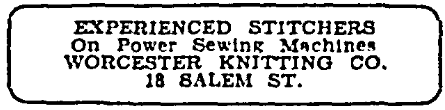
Advertisement for Experienced Stitchers, Worcester Telegram, August 19, 1929

Advertisement for Inspectors, Worcester Telegram, December 16, 1929

By September 1929, the Worcester Telegram reported that the Worcester Knitting Company wanted to take over the space occupied by the City of Worcester's public school department at 90 Franklin Street (located in the Burns Building), just around the corner from 18 Salem Street. The school department had used that space as executive offices as well as for a manual training school, with classes in mechanical drawing, blue print reading, and machine tool designing. Starting in 1930, 90 Franklin Street became the address of record for the Worcester Knitting Company. The company expanded over the years, ultimately occupying the top five stories of the six-story Burns Building as well as the entire five-story building around the corner on Salem Street. Persky even managed to own two other companies, including the Worcester Spinning and Finishing Co. in Leicester and the Narragansett Knitting Mills in Woonsocket, RI.

1936 Sanborn Map

On July 12, 1948, the Worcester Knitting Realty Co., a holding company led by Abraham S. Persky, purchased the Burns Building at 86-100 Franklin Street and the five-story property at 10-16 Salem Street from Matthew P. Whittall. The Worcester Knitting Company had occupied the site since Persky founded the company and the Whittall family had owned the buildings for 45 years. 

Of course, as you might have realized, the Worcester Knitting Company was not the only company that existed at Franklin and Salem Streets. At the time of the sale in 1948, there were several tenants occupying the first floor of the Burns Building, including Whalen's Restaurant, Inc.; Paquette Stationery Co.; Nursery Furniture; and Salem Square Mill End Store.

1950 Sanborn Map


While the Worcester Knitting Company was comfortably settled at their property, the Worcester Free Public Library had long outgrown their space on Elm Street. The library's board of directors had discussed building a new library building since the early 1900s, citing lack of space as well as fire hazards. In 1921, the board requested funds for such a building, even though they did not have a specific plan or even a prospective site. While the mayor rejected the request that time, the library looked for a site where they could potentially construct their new building. Suggestions over the years included creating a civic center in the area of Salem Square with the new library, a municipal auditorium, and other municipal buildings; a location on Pearl Street; the Elks Home on Elm Street; and many other locations. 

Proposed Sites for New Library Building, July 1948


In 1952, the Worcester Sunday Telegram reported on the Worcester Housing Authority's redevelopment project of the Salem Street area and mentioned the Worcester Knitting Co.'s building as being one of the affected properties. The proposed project included demolishing buildings taken by eminent domain, widening streets, constructing new commercial areas, and more in a roughly 23 acre-section of the downtown Worcester area. During that same year, the Worcester Housing Authority suggested that a new library be built at that project area. The New Salem Street Redevelopment Project was contentious for a number of reasons, with proponents for the project advocating for "slum clearance" and opponents discussing loss of businesses, displacement of the residents who lived in the area, and the costs of the project.

By 1953, the library's board of directors recommended the Worcester Knitting Company site as the new location of the library. There was much controversy over building the library on the site of the Worcester Knitting Company building. The Worcester Knitting Company did not want to move at all, and vociferously protested against this proposal. Persky claimed that several hundred Worcester-area people who worked at the factory would lose their jobs if the company moved out of the city. There were requests to exclude the property from the redevelopment project. and the Worcester newspapers were full of articles during this time about the political fights relating to the redevelopment plan and the fate of the Worcester Knitting Company property.

The company won a reprieve with an agreement with the City Council on April 22, 1954, which gave them until June 1960 to vacate the property. In the meantime, the Worcester Knitting Realty Co. sued the city and the Worcester Housing Authority to prevent the eminent domain seizure of the property. A group of taxpayers also filed a lawsuit regarding the redevelopment project.  The final decision on the lawsuit ruled against the Worcester Knitting Realty Co. in 1956. Eminent domain proceedings and demolition of the other properties in this redevelopment area aside from the Knitting Company properties commenced shortly after. 

Before Salem Street Demolition Started / As the Redevelopment Project Looks Today,
Worcester Telegram, July 27, 1957

In 1958, Mayor O'Brien and several city councilors rejected the idea of having the library at that site, claiming that even though a new library was necessary, they didn't want it to move to the Knitting Company site. A lost of tax revenue was one of the reasons that Mayor O'Brien advocated against moving the library to that location. On the other hand, City Manager Francis J. McGrath was all in favor of the proposed location for the library. By the end of 1959, however, library board and a majority of the city council agreed that the Worcester Knitting Company site was the best location. 

The Worcester Knitting Company purchased some of the former Whittall Carpet Mills buildings at 1 Brussels Street (Behind what is now the former Rotman's) in Spring 1958 but indicated that it would take some time to make the necessary alterations to the buildings to fit the needs of the company. The company finally moved in March 1960 and the former Worcester Knitting Company property at Salem and Franklin Streets was demolished that same month. 


Building Coming Down, Worcester Telegram, March 29, 1960


The City of Worcester purchased the property for the library in 1961 after many bureaucratic hurdles and construction on the new library began in May 1962 by Granger Contracting Co., Inc. The laying of the cornerstone to the new library was officially celebrated in a ceremony held October 1962 (see our blog post here: On This Date in WPL History: October 21, 1962 - Cornerstone Ceremony at Main Library) and the library officially opened to the public in May 1964. Aside from our two-year tenure at Fremont Street during the 2001 renovation, we've been at 3 Salem Square for approximately 60 years!
City Buys Library Site, Worcester Telegram, November 2, 1961

Start of Construction on New Library, Worcester Telegram, May 17, 1962

Unfortunately, the Worcester Knitting Company, Inc. filed articles of voluntary dissolution with the Commonwealth of Massachusetts in January 2002.

To end our post, we're going to treat you to a little trivia: did you know that Franklin Street near the Worcester Common has not always been Franklin Street? Throughout Worcester's history, this one section of street was named South Street (because it was south of the Common), Franklin Street (named after Benjamin Franklin), Park Street (starting ~1844), and then officially (again) on January 1, 1913 became known as Franklin Street.


Sources:

"Abraham Persky, 80; Head of Knitting Firm. (1969, April 4). Worcester Evening Gazette, p. 17.

Achorn, R. (1952, April 2). "Housing Board Ambitious Group." Worcester Sunday Telegram, p. 7.

"Before Salem Street Demolition Started / As the Redevelopment Project Looks Today." (1957, July 27). Worcester Telegram, p. 6.

"Building Coming Down." (1960, March 29). Worcester Telegram, p. 13.

"City Buys Library Site." (1961, November 2.) Worcester Telegram, p. 23.

"City Council Dynamites Original Salem Street Plan." (1954, March 26). Worcester Telegram, p. 1.

"Council OK's Salem St. Plan, 6-3." (1954, April 23). Worcester Telegram, p. 1.

"Expect Good Summer Trade." (1925, February 28). Worcester Telegram, p. 8.

"5 Councillors Oppose Plant Site for Library." (1958, March 8). Worcester Telegram, p. 1.

"Franklin Street Site Approved for New Library." (1953, March 21). Worcester Telegram, p. 9.

"Knitting Firm to Leave Salem Sq. Within 3 Months." (1960, January 21). Worcester Telegram, p. 24

"Library Trustees Again Ask Mayor to Act on Fund for New Building." (1921, March 10). Worcester Telegram, p. 1.

"Made in Worcester." (1947, May 12). Worcester Evening Gazette, p. 16.

"McGrath Asks Library on Franklin." (1958, January 17). Worcester Telegram, p. 1.

"Salem Square Project Under Way this Year." (1957, January 9). Worcester Telegram, p. 12.

"Salem Sq. Area Eyed as New Library Site." (1952, October 5). Worcester Telegram, p. 1C.

"Salem Sq. Properties are Sold." (1948, July 12). Worcester Evening Gazette, p. 1.

"Salem St. Project Gets Under Way." (1956, November 21). Worcester Telegram, p. 2.

"Salem Street Project and Library Site Cause Hot Flare-Ups." (1954, January 15). Worcester Telegram, p. 1.

"Salem Street Project Wins Court Approval." (1956, November 20). Worcester Telegram, p.1.

"6 Councillors Favor One Salem St Change." (1954, March 31). Worcester Telegram, p. 1.

"Start of Construction on New Library." (1962, May 17). Worcester Telegram, p. 1.

"Street Art in a City Plan." (1922, June 4). Sunday Telegram Magazine, p. 11.

"Suit Filed Against City." (1954, June 24). Worcester Telegram, p. 2.

"Tool Designing Will be Taught." (1925, October 2). Worcester Telegram, p. 6.

"Worcester Knitting Co. Plans to Buy Part of Former Whittall Mills." (1958, March 29). Worcester Telegram, p. 1.

"Wrecking of Knitting Mill is Next Week." (1960, March 17). Worcester Telegram, p. 21.

Yoffie, A. (2002, February 7). Articles of Dissolution - Worcester Knitting Co., Inc.


Thursday, May 29, 2025

New Releases - June Edition

Check out these highly anticipated new releases featuring fiction and nonfiction titles. Click on the title to request a copy or get your name on the waitlist. Don’t forget to watch for more featured releases next month!

NONFICTION

The Gunfighters: How Texas Made the West Wild  by Bryan Burrough.  Burrough (coauthor of Forget the Alamo: The Rise and Fall of an American Myth) offers a captivating exploration of the Wild West, delving into the era of gunfighters with literary flair and historical depth. He makes the case that Texas was the locus of gun violence in the 19th century (with the highest murder rate per capita in U.S. history), particularly due to its hostile borders with Comanche territory and with Mexico, the coexistence there of Confederate and Union supporters, and the surging cattle business, which was often accompanied by rustlers, gamblers, and vigilantes. However, Burrough also argues that the violent reality of Texas was inflated by sensationalistic journalism, creating a morass of myths and facts. While focusing on activities in and around Texas, Burrough's book is also a more nuanced portrayal of figures such as Wild Bill Hickok, Billy the Kid, and Wyatt Earp than often appears in popular history accounts. The book is fascinating and will be widely popular due to its subject matter, plus it offers two 16-page sets of photos and illustrations and six helpful maps. A must-read for anyone interested in understanding the enduring legacy of the Wild West, in which Burrough expertly separates fact from folklore. VERDICT A fascinating work of history that challenges readers to reconsider the role of the West's legendary gunfighters in shaping the identity of the United States. Copyright 2025 LJ Express.


Baddest Man: The Making of Mike Tyson by Mark Kriegel.  This sinewy biography from journalist Kriegel (The Good Son) traces Mike Tyson’s early life and career. Born in 1966, Tyson came of age in Brooklyn amid financial insecurity, moving constantly as his mother struggled to find work and turning to petty crime by the age of 10. He first became interested in boxing after Muhammad Ali visited the Spofford Juvenile Detention Center where he’d been sent at age 12, and he started training under the supervision of a counselor who happened to be a former champion. Fueled by the rage he carried toward childhood bullies who taunted him for his lisp and glasses, Tyson quickly distinguished himself in the ring and caught the attention of star manager Constantine “Cus” D’Amato during a showcase set up by his counselor. He moved to Upstate New York and began training under the supervised parole of D’Amato, winning his inaugural bout at age 14 with an uppercut that propelled his opponent’s mouthpiece six rows into the crowd. Kriegel’s nuanced portrait notes the many hardships Tyson faced growing up, including watching his mother’s boyfriends brutalize her and getting molested by a stranger, without excusing his flaws, most notably his hair-trigger temper and physical abuse of his first wife. It’s an unflinching glimpse into the formative years of a troubled boxing great. Photos. Copyright 2025 Publishers Weekly.

Present: A Fatherhood Playbook for Healing Relationships and Connecting With Your Kids by Charles Daniels.  This sensitive debut guide from therapist Daniels encourages men to take active roles in their children’s lives, noting studies that found children of absentee fathers are more likely to underperform in school and experience depression. Daniels’s empathetic approach recognizes that absentee parents are often suffering from their own trauma, such as addiction, financial insecurity, incarceration, or childhood abuse. Case studies from Fathers’ Uplift, a family counseling nonprofit founded by Daniels, illustrate strategies for healing. For instance, he recounts encouraging a teen father of two who spent over a year in juvenile detention to connect with his “inner child,” which helped him better understand the needs and perspectives of his children while allowing him to work through the pain he carried from witnessing his own parents’ nonstop fighting as a kid. Though Daniels includes a few practical suggestions, such as reciting affirmations to stay calm during stressful moments, the guidance largely focuses on self-forgiveness, as when he counsels readers to judge themselves not by their past missteps but by “how well we coexist with our mistakes and the lessons we applied from them.” Compassionate and psychologically insightful, this is a must for fathers wondering how to better show up for their kids. Copyright 2025 Publishers Weekly.

FICTION

So Far Gone by Jess Walter.  Like Station Eleven and The Handmaid's Tale, this novel by Walter (The Angels of Rome and Other Stories) feels both prescient and timely yet with a backward glance. The 2016 elections in the United States ignite a fight between Rhys Kinnick and his daughter's new husband, leading Rhys to move off the grid. Seven years later, his grandchildren show up on his front porch, and he has to learn, if not how to parent them, then at least how to reenter the world to save them from their dangerously fundamentalist father. Rhys learns to lean on the people and practices he left behind (including an ex-girlfriend and a journalism career) to find his daughter and salvage a life for her children. Gritty survivalist stories, from bunkers to bar rooms, converge in this propulsive novel that glances backward to 2016 while signaling what dangers come to fruition when people relinquish human bonds in favor of ideological fervor. VERDICT This work is a tremendous achievement: more literary and ambitious than Walter's previous popular books, with an urgency that may make it one of the strongest realist but dystopian novels of the present era.—Emily Bowles, Copyright 2025 Library Journal.


Flashlight by Susan Choi.  Inspired by and building off the framework of Choi's 2020 short story of the same name, this much-anticipated novel spotlights the National Book Award-winning author's gift for illuminating the twisty, psychological aspects of identities and relationships. The story begins with a walk on the beach—10-year-old Louisa and her father talking as they stroll by the water, guided by the father's flashlight. Readers get the briefest glimpse of their conversation: the father telling Louisa that her mother gave her a gift in teaching her to swim. The next morning, in the next narrative moment, he has disappeared, and Louisa has washed up on the shore, barely alive. As the story rolls in and out with both tidal force and quiet currents, it shifts between past and present, each wave receding to reveal cultural and generational dislocation, all of which converges when past crashes into present. VERDICT Choi's follow-up to Trust Exercises proves she's a writer at the top of her game, capable of crafting a well-plotted and complex story while remaining attuned to small internal motivations, along with intersectional and cultural liminalities, those edges between surf and sand where so much violence happens, as much to bodies as to hearts, minds, and homes.—Emily Bowles, Copyright 2025 Library Journal.

The Gowkaran Tree in the Middle of Our Kitchen by Shokoofeh Azar.  Azar's debut novel, The Enlightenment of the Greengage Tree, made LJ's list of the Best World Literature of 2020. Her second novel opens as an extended family gathers for a wedding, and the hosts cope with the appearance of the titular tree. Its fruits are legion and luscious. Thus begins the magical realism, which intensifies the brutal reality of Iran in the 1970s and spans 50 years, following 12 children who were lost inside a mysterious palace one night. The members of the family—children, young lovers, older folks—experience the devastating torment of the Islamic Revolution and the Iran-Iraq War. Azar's lens of Persian spiritualism welcomes phenomena like intelligent balls of light, Lady Death with a peacock, and God in fine fettle, dancing at another wedding that closes the novel. Put into extraordinarily agile English from the original Farsi by a translator who is staying anonymous for security reasons, this work will establish Azar as one of Iran's most eloquent voices in exile. VERDICT It is not an exaggeration to compare Azar's work to Rushdie's Satanic Verses; they are continents apart but united in wild imagination and audacious style.—Barbara Conaty
Copyright 2025 LJ Express.


Friday, May 23, 2025

Craft & Hobby

Craft and Hobby is an online platform that provides access to fun and creative educational resources. You can explore in-depth instructional videos and classes to learn a new craft or hobby, or improve existing skills. Available to you from the comforts of your home with a WPL library card. Go to our databases page and select Craft & Hobby.


Here are some of the popular categories.

   Baking & Cooking  Cake Decorating
  Crochet   Dance
  Embroidery   Fitness
  Knitting   Painting
  Photography  Quilting
  Scrapbooking   Sewing

Monday, May 19, 2025

Naming Library Spaces: The Saxe Room

You may be aware of our two main meeting spaces, the Saxe Room and the Banx Room, but do you know how they got their names? Today's blog post is going to focus on the origins of the larger meeting room, the Saxe Room, named after James Alfred Saxe and his wife, Mary Wick Saxe.


"Succumbs," Worcester Telegram, May 20, 1948

So who were the Saxes and why are their names immortalized at our library? 

James Alfred Saxe, was born in Troy, NY, on December 2, 1863 and lived in Massachusetts most of his life. James, the twin brother of John W. Saxe and nephew of poet James Godfrey Saxe, was educated at Wilbraham Academy, Wesleyan College, and Harvard College. He also studied singing and violin at the Berlin Conservatory of Music before returning to the United States to study law at Harvard Law School. He graduated law school in 1892 and married Mary Wick of Cleveland, Ohio, the daughter of a banker, in June of that same year. James worked for a couple of years with his brother in Boston before James and Mary moved to Worcester in 1895, where he became a title examiner at the metropolitan water board. He founded the Worcester County Abstract Co. in 1897 [Note: a title examiner is a person who researches the history and previous owners of a specific piece of property], where he remained active in the company until 1929.

Undated Photo of James A. Saxe

James was an prominent member of the Worcester community, with news reports through the years detailing his performances as a bass singer in church quartets and other concerts, his memberships in the Church of the Unity/First Unitarian Church and the Worcester County Bar Association, his participation in golf tournaments, and his donation of a rare coin collection to the Worcester Historical Society.

Mary Wick Saxe's Photo on Her Emergency Passport Application, circa April 1920

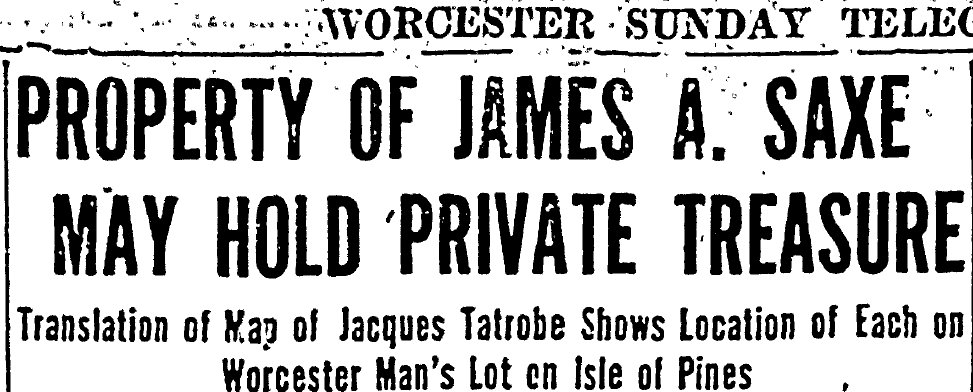
Mary Wick Saxe was a frequent world traveler (many times accompanied by her mother, also named Mary, and sometimes her husband, James- the three of them even took a 9-month voyage around the world in 1907!), and would recount her grand adventures at gatherings of the Worcester Woman's Clubhouse Association and in the Worcester newspapers. She once wrote about her experiences in India in the Worcester Evening Gazette in 1914. By the late-1910s, James and Mary owned an estate in the American settlement of Vivi Agua (also known as Bibijagua), Isle of Pines, Cuba, that served as their winter home. There were even rumors of buried pirate treasure on the property but no troves were ever reported to have been found.

"Property of James A. Saxe May Hold Private Treasure." Worcester Sunday Telegram, May 18, 1919

"Saxe's Bungalow in Isle of Pines," 1933

Mary died in 1939 at the age of 71 in Cuba after a long illness. She was buried in Cuba at the Columbia Cemetery. 

Report of the Death of an American Citizen - "Mary Wicks [sic] Tennis Saxe" May 12, 1939

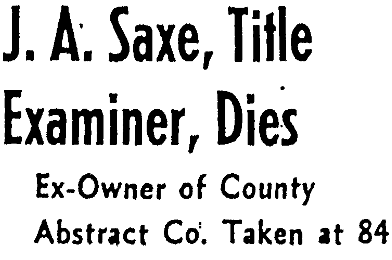
James Alfred Saxe died May 19, 1948 at the age of 84 in his home on 227 Burncoat Street in Worcester. He was buried in Oakwood Cemetery in Troy, NY.

J.A. Saxe, Title Examiner, Dies." Worcester Telegram, May 20, 1948

A week after Saxe died, the Worcester newspapers reported on the contents of Saxe's will. One major bequest was $50,000 to the City for the Worcester Public Library. At that time, it was the largest gift to the library and adjusted for inflation, $50,000 in 1948 currency would be worth over $650,000 today! Per the will, twenty-five thousand dollars would be used to create a James A. and Mary W. Saxe Room at the new public library, if and when it was erected (if you recall from previous blog posts, the new library building at 3 Salem Square would not be completed until 1964). The other half of the bequest for the library was to be used to purchase "books of a serious nature for the present library" (Worcester Evening Gazette, May 24, 1948).  The will stipulated that if the new public library was not built within 21 years, the money could be used to purchase additional books for the library. The Saxe Fund was to be left in the hands of private trustees and then it would be turned over to the city.

"$50,000 is Left City in Saxe Bequests," Worcester Evening Gazette, May 24, 1948, p.1

By 1953, part of the Saxe Fund was used to acquire poetry records, music scores, and projection equipment and screens to show documentary films and slide-film programs. Trustees of the Saxe Fund also created a scholarship fund in 1955 for present and prospective staff to study library science. The Saxe Fund is still in existence.

The Saxe Collection of Recorded Poetry Drama and Speech, 1953

In 1962, the library board asked the trustees of the Saxe estate to contribute the funds for two meeting rooms "in accordance with the provisions of the Saxe will" (Worcester Evening Gazette, November 14, 1962).  In May 1964, the new library building at 3 Salem Square finally opened to the public, with the Saxe Room and Conference Room A located on the second floor of the library. Both rooms were designed in the fashion of the 1960s, with walls in teak and drapes in wildly clashing colors, called "Joseph's Coat." The Saxe Room would fit 135 people and Conference Room A would fit 40 people. The Saxe Room was intended to be used for film screenings and recitals, among other meetings. 

"I'm Confident Our Readers Will Like It," Worcester Sunday Telegram - Feature Parade Section, March 1, 1964

Conference Room A would become the Al Banx Room in 1974. Renovation of the Saxe and Banx Rooms began in the summer of 1988. It included new ceilings, carpet, paneling, furniture, and most importantly, asbestos abatement. The Saxe and Banx Rooms were rededicated in October 1988.

The Saxe and Banx Rooms moved to their present location on the first floor by the parking lot entrance during the major library renovation that finished in 2001. The two rooms are still in use today for library programs and community meetings. So when you attend one of our library programs in the Saxe Room, you can surprise everyone with your knowledge of the history of the space!

Stay tuned for a future blog post on the Banx Room...

Sources:
"Announce Fund for Library Scholarships." (1955, March 3). Worcester Evening Gazette, 8.

"Banx, Saxe Rooms Rededicated." (1988, October 23). Worcester Sunday Telegram, 35 A.

"50,000 is Left City in Saxe Bequests." (1948, May 24). Worcester Evening Gazette, 1.

"I'm Confident Our Readers Will Like It." (1964, March 1). Worcester Sunday Telegram - Feature Parade Section, 14.

"J.A. Saxe, Title Examiner, Dies." (1948, May 20). Worcester Telegram, 1.

"James A. Saxe, 84, Dies in His Home." (1948, May 20). Worcester Evening Gazette, 60.

"Library Anticipates $1,800 Budget Hike." (1962, November 14). Worcester Telegram, 18.

"Library Tour A Colorful Experience." (1964, April 21). Worcester Telegram, 13.

"Mrs. James A. Wick Saxe." (1939, May 13). Worcester Telegram, 4.

"$100,000 Charity Bequests in James A. Saxe's Will." (1948, May 25, 1948). Worcester Telegram, 11.

"Postal Rate Rise Hits Library Budget. (1962, November 14). Worcester Evening Gazette, 6.

"Property of James A. Saxe May Hold Private Treasure." (1919, May 18). Worcester Sunday Telegram, 12C.

"Rare Old Coins Given Society." (1945, July 5). Worcester Telegram, 2.

"Saxe Tours the World." (1907, August 2). Worcester Telegram, 14.

"Work, Real Hard Work." (1900, July 1). Worcester Sunday Telegram, 9.

The Worcester Free Public Library. (1953). The Saxe Collection of Recorded Poetry Drama and Speech.


Saturday, April 26, 2025

New Releases - May Edition

Check out these highly anticipated new releases featuring fiction and nonfiction titles. Click on the title to request a copy or get your name on the waitlist. Don’t forget to watch for more featured releases next month!

FICTION

The Original Daughter by Jemimah Wei.  California-based Singaporean writer Wei, a Pushcart Prize nominee, brings to readers a family tale set in working-class Singapore and New Zealand and centered on 27-year-old Genevieve. In her childhood, her grandfather's secret family came to light with the arrival of his newly discovered descendant Arin, who is a year younger than Gen. Gen's parents took Arin in as a daughter, since she was seemingly abandoned by her birth family, and Gen has resented her ever since. Gen narrates a lifetime of strife with Arin, who later becomes a famous actress, and also deals with her mother's breast cancer and her father's emotional infidelity. Wei's multilayered writing sweeps readers up to carry them alongside Gen through her emotional and financial struggles and lifelong conflict with Arin as they both vie for their mother's love and attention. . .   VERDICT This novel should appeal to readers who appreciate relationship-based stories within families; also a good candidate for book clubs.—Shirley Quan.  Copyright 2025 Library Journal.

Old School Indian by Aaron John Curtis. A Native American man returns home to heal wounds both literal and metaphorical. Abe Jacobs, the hero of Curtis’ finely tuned debut, is 43 and seriously ill. He’s taken a break from his job as a bookseller in Miami (and from his wife, Alexandria East), to visit family on a Mohawk reservation in upstate New York. . .  while he waits for a formal diagnosis, he skeptically but desperately accepts some folk treatment from a great-uncle. Otherwise, he spends his stay reconnecting with friends and family, attempting to make sense of his various past struggles: a depression that led to a suicide attempt, a difficult open relationship with Alex, and a stalled career as a poet. That last challenge gives the novel a poignant, lyrical lift: An alter ego of Abe’s, Dominick Deer Woods, regularly intrudes on the narrative, sharing excerpts of Abe’s poetry and generally serving as his snarkier, more confident self. . .  Some of those sidebars deal with Native American life, from food to tribal relationships, to the bigotry that informs Abe’s skepticism of traditional medicine, to forced sterilizations, and more. . . An affecting tale of loss and healing that thrives through its seriocomic style. Copyright Kirkus 2025.


Anima Rising by Christopher Moore. Moore (Shakespeare for Squirrels) offers an absurdist and sardonic sequel, of sorts, to Frankenstein. It begins in early-1900s Vienna and is populated with historical figures like Egon Schiele, Gustav Klimt, Sigmund Freud, Carl Jung, and a young Hitler. Readers meet painter Klimt when he is out early one morning and finds the body of a young woman who appears to have drowned in the river. He is struck by the unique tint of her skin and is compelled to sketch her. When it seems she's not dead yet, he brings her back to his studio, but the woman, whom he names Judith, cannot remember who she is. Klimt calls upon Freud for assistance, and he eventually calls upon his protĂ©gĂ© Jung for help with this unique case. These sessions reveal hidden memories about her creation and bizarre history, which include Victor Frankenstein and a trip to the underworld. VERDICT This is a wild adventure through history, art, and literature for Moore's many fans and those who enjoy historical fiction with a side of fantasy and wry humor. Highly recommended.—Kristen Stewart. Copyright 2025 Library Journal.

NONFICTION

Life and Art by Richard Russo.  Pulitzer Prize-winning novelist Russo's (Somebody's Fool) second essay collection focuses on writing and his life. He has written screenplays for a number of his books, including an HBO miniseries for Empire Falls. Reading about his childhood, youth, and early adulthood, growing up in a Rustbelt town in upstate New York as the son of an often-absent father and an ambitious mother, helps readers understand the source of his books' settings, their characters, and his (and their) outlooks on life. Thirteen essays (some of which originally appeared in The Atlantic, Harper's, and the Journal of the American Psychoanalytic Association) reveal even more of Russo's background and interests—studying for his Ph.D. in literature at the University of Arizona, teaching English at Colby and other colleges, traveling across the country on book tours, screenwriting and adapting his own work. Russo also writes of his interest in Kingsley Amis's novel Lucky Jim, the 1969 film Butch Cassidy and the Sundance Kid (and one of its stars, Paul Newman), and Townes Van Zandt's song "Pancho and Lefty." VERDICT A welcome visit with a major contemporary writer.—Marcia Welsh Copyright 2025 LJExpress.

The Art Spy by Michelle Young.  Young chronicles the vividly atmospheric saga of Rose Valland, a French art historian who risked everything to spy on the Nazis during World War II, as a key Resistance spy in the heart of the Nazis' art-looting headquarters. While Hitler was amassing stolen art for his future FĂĽhrermuseum, Valland was secretly working to stop him from looting paintings by Picasso, Monet, CĂ©zanne, Gauguin, Braque, Degas, Modigliani, and Toulouse-Lautrec. Based on previously undiscovered historical documents, this extensively detailed portrait of Valland's bravery and strategic intelligence makes for exciting reading. The fascinating book offers insights into the Nazi's art looting operations and Valland's crucial role in preserving France's cultural heritage. The story of Valland's courage and dedication to art and justice is compelling and inspiring. VERDICT This book should have broad appeal, thanks to its previously unsung World War II Resistance spy heroine and the rich details of her exploits, making it ideal for fans of espionage and strong narrative nonfiction that reads like a compelling novel.—Lawrence Mello Copyright 2025 LJExpress.
They Poisoned the World: Life and Death in the Age of Forever Chemicals by Mariah Blake. Investigative journalist Blake tells the story of her investigation into the lives and workings of the people in a small town in upstate New York who had grown suspicious of the local industrial plant after there had been an inordinate amount of health problems and cancer deaths among the small population. This industrial plant employed most townspeople and made food-preserving products, including Teflon. Obtaining her information through personal interviews with the local people and through numerous public documents, Blake discovered that this plant was dumping waste into the local water supply. All the while, the chemical industry at large was aware of the deadly and long-term effects of these "forever chemicals." The company running the plant in New York had gone to extreme lengths to cover it up, including manufacturing false research studies. Ultimately, the chemicals were banned, yet long-term health issues and environmental problems persist. Blake tells this heartbreaking and horrifying story in a manner that should motivate and outrage readers. VERDICT A powerfully written narrative that needs to be shared widely.—Steve Dixon Copyright 2025 LJExpress.