Wednesday, July 27, 2016

Superfoods, Super You! Summer Recipe Series: Cold Noodle Salad


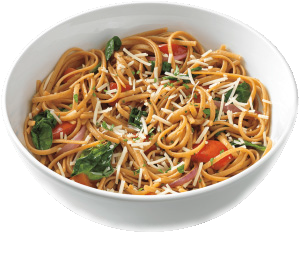
The next recipe in our Superfoods, Super You Summer Recipe Series is a delicious cold noodle salad which is perfect for the upcoming hot summer evenings. This recipe was a hit at our Summer Reading Kick-off event and incorporates fresh veggies with a delicious Asian flavor.


Ingredients:

cold noodle.png• 16 ounces thin whole wheat spaghetti or angel hair pasta
• 2 teaspoons dark sesame oil
• 1/3 cup Chinkiang vinegar (or rice vinegar )
• 1/3 cup soy sauce
• 2 tablespoons brown sugar
• 2 cups cucumber, julienned
• 2 cups carrots, shredded
• 1/2 cup chopped fresh cilantro
• 2 tablespoon toasted sesame seeds

Instructions

  1. In a large pot, cook spaghetti according to package directions (al dente). Drain, rinse spaghetti with cold water, and set aside in large bowl.
  2. In a medium bowl: mix Chinkiang vinegar and soy sauce with brown sugar. Toss in cucumber, carrots, cilantro, and sesame seeds.
  3. Stir dressing mixture into the cold cooked spaghetti. Mix well.
  4. Toss noodles and sauce again before serving. If dry, splash with a little soy sauce and vinegar. Serve cold.

Have a healthy recipe you enjoy and would like to recommend? Submit it through our Summer Reading Program  and complete the “Share Your Favorite Recipe” challenge or email me at jmarien@mywpl.org and perhaps your recipe will be featured on this blog!

Tuesday, July 26, 2016

July 2016 Staff Book Recommendations

Obsidian: A Lux Novel
By Jennifer Armentrout 


Alright Twilight fans, Obsidian is for you! Like Bella, Katy hails from Florida and moves to a small town, much like that of Forks. This town is in West Virginia and it is so small, it only contains one stop sign—not even a red light! 

When Katy arrives, she hopes to gain some insight from her neighbor Daemon Black about the town’s stores and such, only to find him to be ...not very friendly. He is rude, arrogant, and a flat-out jerk, but his sister Dee is a veritable ray of sunshine. She is bright, bubbly, always happy, and is beyond absolutely stunning (borderline perfect). All Katy wants is to be friends with Dee, but the problem is her brother Daemon (who, by the way, is also to good-looking to be true). He wants his sister to have nothing to do with Katy and “her kind.” Confused and angry, Katy refuses to give up; she continues to be friends with Dee, despite Daemon’s less than hospitable personality. Eventually, certain events fall into place and Katy and Daemon are forced to work together toward a common goal and the truth behind Daemon’s aggressive and, at times, verbally hostile demeanor is revealed, leaving Katy little to no choice in what happens next. 

Discover more connections between the bestselling novel Twilight and this first novel in the Lux series novel by bestselling author Jennifer Armentrout today! 

--Jess

But What If We’re Wrong?
By Chuck Klosterman


What if all of the assumptions that we take for granted will be looked at by future generations as completely mistaken or irrelevant? This is the main question tackled by Chuck Klosterman in his new book But What if We’re Wrong: Thinking About the Present As If It Were the Past. Klosterman, a well-known essayist whose last book I Wear the Black Hat covered the nature of evil, this time turns his attention to our tendency to try to predict what will happen in the future. From debating whether football will still be a dominant sport in the coming decades, to whether we will still view gravity the same way we do now, Klosterman brings his unique wit and insights to a variety of topics large and small.

Among other things, Klosterman explores whether or not cultural works that are today looked at as being the most significant, will continue to be viewed as equally important in the future. One of Klosterman’s most interesting arguments deals with the idea that it is incredibly hard to determine what books and authors will be viewed as the most historically significant and for what reason. Klosterman cites the example of Moby Dick, noting that the book was commercially and critically unsuccessful for decades until a critical reappraisal happened in the wake of the horrors of World War I for unclear reasons. As Klosterman writes “it’s not like Moby Dick was the only book that could have served this role.”

Klosterman is always a great read, because even if you don’t agree with his conclusions, his arguments are always delivered engagingly and thought-provokingly. To be fair, there is a fair amount of rambling in Klosterman’s chapters, and a few of them could perhaps use a bit more editing. Depending on your tolerance for philosophical topics like this, you might find But What If We’re Wrong? to be profoundly annoying. I enjoyed it though, and would recommend it
.

--Alex


The Wright Brothers
By David McCullough


Through the use of primary source material housed at the Library of Congress, David McCullough pens the exciting story of the Wright brothers’ climb from small boys awed and inspired by a French toy helicopter, to bicycle shop owners,and finally, to the inventors of the “the first powered, heavier-than-air machine to achieve controlled, sustained flight with a pilot aboard.” Many of us are familiar with the basic story of Wilbur and Orville’s first flight at Kitty Hawk, North Carolina, but McCullough reveals a deeper, more comprehensive view of the lives of the Wright brothers and those who were part of their epic invention. 

McCullough introduces us to the Wright family following the death of their mother due to tuberculosis in 1889. Wilbur, Orville, and Katharine are the three out of seven siblings living at 7 Hawthorne Street in Dayton, Ohio with their father, the Bishop Milton Wright. McCullough makes great use of the family correspondence, diaries, and papers to bring to life the personalities, relationships, and accomplishments of this close-knit family. Wilbur, the tall and quiet thinker, Orville, the well-dressed, hands-on extrovert, and Katharine, the social, outgoing sister, and the only Wright sibling with a college degree, come to life through McCullough's detailed biography. 

Subject File: Chanute, Octave--Photographs, Kitty Hawk, North Carolina, Originals, 1901, Wilbur and Orville Wright Papers, Manuscript Division, Library of Congress, Washington, D.C.

Whether you read the book or listen to the e-audio version, you will become wrapped inside the life of the Wright brothers. McCullough’s ability as a storyteller does not falter with this book. Critics point out McCullough’s lack of focus on the patent wars instigated by the Wrights which caused a lapse in aviation invention in America for a period of time. Regardless, the most amazing parts of their lives and of American innovation in the early 20th century shine through and make us wish we were there to comfort Orville and bring him back to health after his fatal flight at Fort Myer, Virginia; or, we were there snapping a photo of their glider at Kitty Hawk; or, we were there witnessing Wilbur’s spectacular flight at LeMans, France. Thanks to McCullough, you can get pretty close. 

 --Jen


Battleborn : Stories
By Claire Vaye Watkins

A short story is a love affair, a novel is a marriage.


I don’t know, I’ve had love affairs with novels in the past, but maybe Ms. Moore was speaking from the writer’s point of view.  Anyway, now that I’ve got your attention, if you’re a fan of the short story genre and don’t mind gritty themes, Battleborn : Stories by Claire Vaye Watkins is not to be overlooked. 

The debut publication for this writer, these ten stories manage to be heartbreaking without being maudlin, thoughtful but not depressing, and serious while still entertaining.  The geographical setting is the American West--the Nevadan desert, the lower half of California. Throughout, the landscape acts as an additional character, non-judgmental but omniscient, nonetheless. Scenes take place in casinos, ghost town bars, trailers, and a bordello, and plots run toward the harsh and dark: A desert hermit takes in a teenage runaway and tender feelings long dormant are awakened in “Man-o-War”; In “Wish You Were Here,” a young couple can no longer recognize each other after miraculously creating a child together.  But, like good art, Watkins clean writing and unsparing eye make every story worth any discomfort its truth reveals.

Typical of any promising young writer, Watkins has been widely compared to well-known veterans; in this case, Cormac McCarthy, Denis Johnson, Richard Ford, Annie Proulx, and Joan Didion.  She also reminds me of another newcomer, Karen Russell, author of Vampires in the Lemon Grove and Swamplandia! Interesting side note: The author is the daughter of Charles Manson’s right-hand man and “procurer of young girls” Paul Watkins, and the first story in the collection, “Ghosts, Cowboys,” explores the reality of being so closely related to such an extraordinarily notorious historical phenom.

Not for the faint of heart.

--Christina


Wednesday, July 20, 2016

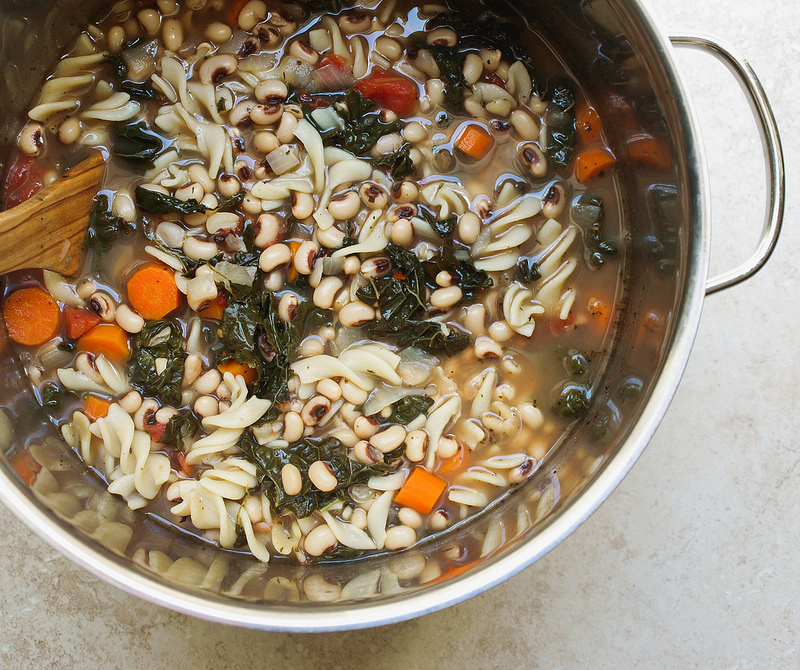
Superfoods, Super You! Summer Recipe Series: Pasta and Bean Soup with Kale


This week's post in our Superfoods, Super You! Summer Recipe Series is a patron-submitted recipe received through our Summer Reading Program recipe challenge.Thanks to Victoria, you can make this Pasta and Bean Soup with Kale chock full of protein-packed beans, vitamin-packed kale, and some lovely herbs.


Ingredients:
  • 1 pound dried beans* (black eyed peas, cranberry or great northern beans) or 3 cans (15 oz) various beans, drained and rinsed
  • 1 tablespoon grapeseed or olive oil or 3 tablespoons water (for water saute)
  • 1 medium yellow onion, diced
  • 2 garlic cloves, minced
  • 2 large carrots, sliced
  • 1 bunch Tuscan kale (about 4 loose cups), center stems removed and roughly chopped
  • 2 large organic tomatoes, diced (I leave the skin on) or 1 can (15 oz) crushed canned tomatoes with juice
  • 8 cups vegetable broth or water
  • 1 tablespoon dried thyme or 2 tablespoons fresh thyme
  • 2 teaspoons dried sage or 3-5 fresh sage leaves, chopped
  • 2-3 teaspoons smoked paprika
  • Optional 3 bay leaves a pinch or two of red pepper flakes
  • Himalayan salt to taste
  • Cracked pepper to taste
  • 8 oz of pasta of choice
  • Almond parmesan and lemon, for serving

*Preparation for dried beans:

Pre-soak your beans overnight, or at least 8 hours, in a large pot of water filled two to three inches above the beans. Drain and rinse well, set aside. After pre-soaking, different beans will need to cook and simmer for different times. Cranberry beans need 45 minutes or so cooking time, while northern beans & black eyed peas need about 1 – 2 hours.

Instructions:

  1. Using the same pot you pre-soaked your beans in, add oil/water and heat over medium heat
  2. Add onion and cook until translucent, about 5 minutes
  3. Add garlic, carrots, thyme, and sage, cook another minute or so
  4. Add broth(or water), beans (prepared dried beans or canned beans), bay leaves, tomatoes, kale and red pepper flakes
  5. Bring to a boil, cover, reduce heat to low, and simmer until beans are done (time varies depending on beans…the black eyed peas will take about 1 1/2 hours; canned beans will take about 30-40 minutes)
  6. Stir occasionally
  7. While the soup is simmering, cook your pasta according to package, set aside
  8. Once soup is ready, remove bay leaves, add in pasta, and cook for 5 more minutes
  9. Add salt and pepper to taste
  10. Serve with a dusting of almond parmesan and a squeeze of lemon for brightness

Pairs great with crusty artisan bread or warmed corn tortillas.


Have a healthy recipe you enjoy and would like to recommend? Submit it through our Summer Reading Program  and complete the “Share Your Favorite Recipe” challenge or email me at jmarien@mywpl.org and perhaps your recipe will be featured on this blog!

Wednesday, July 13, 2016

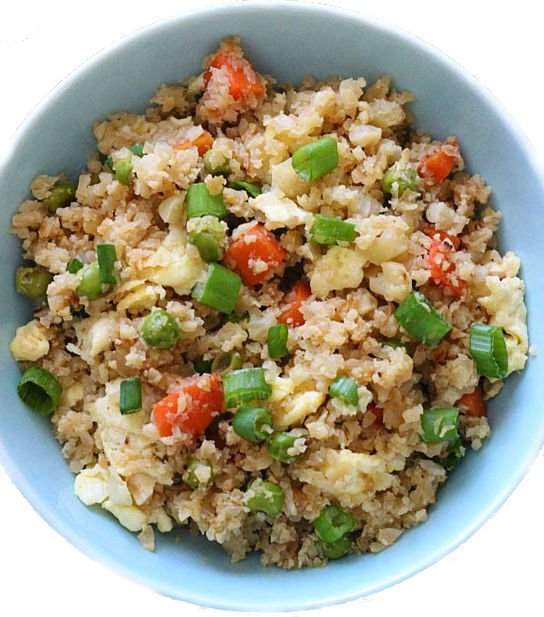
Superfoods, Super You! Summer Recipe Series: Cauliflower Rice with Mixed Veggies


Up next in our Superfoods, Super You! Summer Recipe Series is cauliflower rice with mixed veggies. Substituting cauliflower for rice makes your favorite fried rice dish super healthy. Packed full of cauliflower, carrots, and peas, this recipe was a hit at our Summer Reading Kick-off event! This is a simple recipe you can experiment with - try different veggies and different spices, and most of all enjoy eating healthy, tasty, food!


Cauliflower-Fried-Rice-550x782.jpgIngredients:

  • 1 head cauliflower, chopped into florets
  • 1 small yellow onion, finely chopped
  • ½ cup frozen peas
  • ½ cup carrots, cubed
  • 1 Tbsp sesame oil
  • ¼ cup low sodium soy sauce
  • 1 Tbsp light brown sugar
  • ⅛ tsp ground ginger
  • Pinch red pepper flakes
  • 2 Tbsp green onions, chopped

Instructions:

  1. Chop head of cauliflower into florets and place in food processor. Pulse until it starts to resemble rice; set aside.
  2. Heat a large wok (or skillet) over medium heat and drizzle in sesame oil. Add onion, peas and carrots and saute until tender, about 2 minutes.
  3. Meanwhile in a small bowl, whisk together soy sauce, brown sugar, ginger and red pepper flakes; set aside.
  4. Stir in cauliflower "rice" and pour the soy sauce over top, mixing well. Cook for an additional 3 to 4 minutes, until cauliflower is soft and tender.
  5. Top with green onions, serve and enjoy!

Have a healthy recipe you enjoy and would like to recommend? Email me at jmarien@mywpl.org and perhaps your recipe will be featured on this blog!
                         

Friday, July 8, 2016

Superfoods, Super You! Summer Recipe Series: Kale Chip Recipe contributed by WPL patron, Jasmine!

In continuation with our Superfoods, Super You! Summer Recipe series, enjoy this healthy kale chip recipe submitted by our patron, Jasmine! Kale chips were also featured at Worcester Public Library’s Summer Reading Kick-off. Great suggestion, Jasmine!


Ingredients:

  • 1 large kale bunch, tough stems removed, leaves torn into pieces (about 16 cups)
  • 1 tablespoon extra-virgin olive oil
  • 1/4 teaspoon salt

Preparation:

  • Position racks in upper third and center of oven; preheat to 400°F
  • If kale is wet, very thoroughly pat dry with a clean kitchen towel
  • Transfer kale to a large bowl, drizzle with oil and sprinkle with salt
  • Using your hands, massage the oil and salt onto the kale leaves to evenly coat
  • Fill 2 large rimmed baking sheets with a layer of kale, making sure the leaves don’t overlap (If the kale all of the kale doesn't fit, make the chips in batches)
  • Bake until most leaves are crisp, switching the pans back to front and top to bottom halfway through, 8 to 12 minutes total (If baking a batch on just one sheet, start checking after 8 minutes to prevent burning)

Tips:

  • Choose organic kale when possible, non-organic kale can have high pesticide residue
  • Store in an airtight container at room temperature for up to 2 days


From EatingWell September/October 2011

Have a healthy recipe you enjoy and would like to recommend? Email me at jmarien@mywpl.org and perhaps your recipe will be featured on this blog!

Tuesday, June 28, 2016

Join the Big Library Read 2016 by e-borrowing A Murder in Time

Starting today until July 7, users from over 20,000 libraries around the world will be participating in the Big LibraryRead, a global digital book club. Readers can borrow A Murder in Time by Julie McElwain without wait lists or holds and join the OverDrive discussion board to share their thoughts.

Fans of mystery, Jane Austen and/or time travel will love this thrilling story of an FBI agent from present day trying to solve a murder case while trapped in the early 1800’s. WPL library users can also hear an exclusive interview with the author, Julie McElwain on Professional Book Nerds podcast and will find read-alikes the our Big Library Read website. Borrow the title, join the conversation and learn about the author’s writing process.

For the next two weeks, you can be a part of the largest digital book club in the world!  All you need is a WPL card. On mywpl.org, click on Ebooks and Digital Media, then OverDrive to go to the digital catalog and check-out the book.

Thursday, June 23, 2016

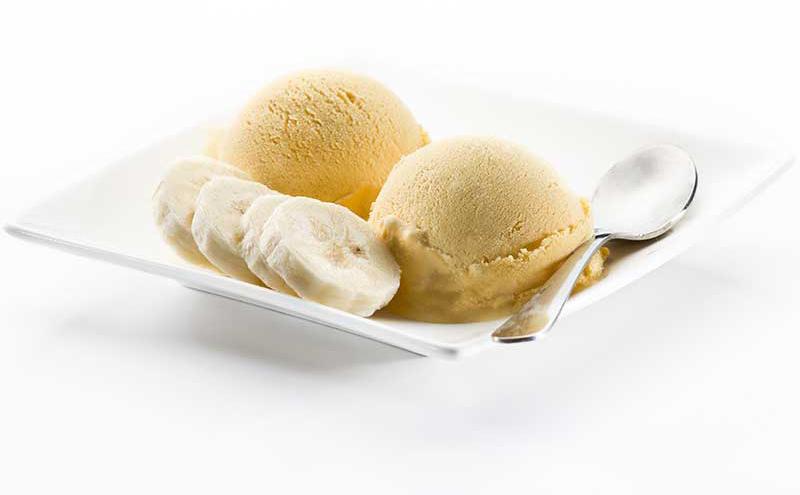
Superfoods, Super You! Summer Recipe Series: Banana Ice Cream

In conjunction with our summer reading theme, Wellness, Fitness, and Sports, we will be blogging weekly about our Superfoods, Super You! Summer recipes that were featured at our Summer Reading Kick-Off event this past Saturday, June 18th. Samples of plant-based superfoods were offered to patrons and staff showcasing easy, healthy alternatives to our everyday meals and snacks.


This week’s blog focus is dessert. Banana Ice Cream is a healthier alternative to ice cream or even frozen yogurt. Ask anyone who attended WPL’s Summer Reading Kick-Off event this past Saturday and they will tell you the Banana Ice Cream was a huge hit! It is cheap, easy, and fun to make.


Take those ripe bananas from your counter, peel them, cut them, freeze them, and the next day throw them in your food processor. That’s it. You can experiment with all different kinds of flavors as well.


At the Summer Reading Kick-Off event, patrons and staff enjoyed vanilla, chocolate, and plain banana. But the sky's the limit! Try ginger, turmeric, cinnamon, peanut butter, nutella, mint, cardamom, frozen berries...I could do this all day long! As for toppings, go nuts! Try chia seeds, slivered almonds, walnuts, fresh berries, or have the ice cream as is. This is a low-calorie, dairy-free treat that you need to try today. See the recipe below.


Healthy Banana
Ice Cream Recipe
banana.jpg


Ingredients:
•  4-5 ripe bananas
•  Flavors such as vanilla extract, cocoa powder,
cinnamon
•  Toppings such as chia seeds, berries, nuts,
granola
Equipment: freezer bag, spatula, food processor
Peel and cut bananas into 1 inch pieces and freeze in
plastic freezer bag over night.

Take frozen banana pieces and place them in
food processor.

Add flavor to taste and process for 1 to 2 minutes, until
smooth and creamy (don’t over process!)
Sprinkle with preferred toppings, such as nuts or berries
and enjoy a healthy dessert.
Or, place ice cream in freezer safe container for later!
(will hold for up to two days in the freezer).


Have a healthy recipe you enjoy and would like to recommend? Email me at jmarien@mywpl.org and perhaps your recipe will be featured on this blog!

June 2016 Staff Book Recommendations

The Rook
By Daniel O’Malley 


The Rook starts with a compelling hook: A young woman wakes up in a park with no memory of her identity, surrounded by dead bodies wearing latex gloves. In her pocket she finds a letter telling her that her name is Myfanwy Thomas, that she is a high-ranking member of a secret organization dedicated to protecting the United Kingdom from supernatural threats, and that she was betrayed by someone she trusted. Now, informed only by letters written by herself to herself, she has to work at a high stakes job she has no memory of having, deal with supernatural coworkers who might literally stab her in the back to get ahead, and solve the mystery of who betrayed her and stole her memory, all while protecting London from an ancient evil. 

O’Malley’s use of the memory loss plot and the letters allows The Rook to adroitly weave in the large amount of exposition that is necessary in this kind of book. I also appreciated the fact that the pre-memory loss Myfanwy is presented as a completely distinct character from post-memory loss Myfanwy, and that both characters are equally compelling despite one only appearing in flashback letters. O’Malley also does a great job mixing humor in with the action, and his world-building is top-notch. 

While many elements of this book are familiar for regular fantasy readers, what really makes it stand out from the pack is its compelling protagonist. So many urban fantasy novels tend to be about a supernatural private detective, or a supernatural police officer, or a supernatural warrior of some kind. It’s refreshing to read about a heroine who, while able to defeat monsters with supernatural powers, solves many of her problems by being really good at bureaucracy and diplomacy. The Rook is also less “bro-y” and more British than many typical urban fantasy novels. 

I highly recommend this book. It’s incredibly fast-paced, and once you pick it up, you won’t want to put it back down. And if you like it, a sequel comes out this month.

--Alex


Miller’s Valley
By Anna Quindlen 

Anna Quindlen is one of those writers who possesses a knack for exposing the kernel of truth in every situation, every scene. She is a Pulitzer Prize-winning journalist and a bestselling author in the self-help genre, but her forte is rendering real the domestic front, as her novels Object Lessons and One True Thing demonstrate. And she knows how to build suspense—this reviewer read Black and Blue in one night! 

Miller’s Valley tells the coming-of-age story of Mimi, daughter of hardworking Buddy and stoic Miriam. It is also a tale of change for Miller’s Valley itself, the long-established town named after Mimi’s family, which is on the brink of literally being flooded in the name of civic progress. Long-time residents can accept this development “the easy way or the hard way.” The easy way is to take the government’s relocation pittance, sell and move elsewhere. The hard way? You’ll have to read the book to find out. 

Set against this small town tumult, family secrets play out. Mimi’s older brothers both leave her behind on the farm-- Eddie, off to college, and Tommy, to Vietnam. While Eddie makes good on his escape, Tommy returns from the war as a ghost of his former self. Plus, Aunt Ruth is agoraphobic, best friend LaRhonda is wild turned religious, and older boyfriend Steven is too clever by half. The plot is remarkable in its ordinariness, in that it is the story of many American families, and towns, in the 1960s and 70s, yet the novel is so readable, you will find yourself immediately invested, needing to find out the source and resolution of each character’s conflict. 

For readers who enjoy novels about families, relationships and small town history. 

--Christina

The New Kids: Big Dreams and Brave Journeys at a High School for Immigrant Teens
By Brooke Hauser 


As I have been getting to know and care for the students with whom I spend my time in my American English Made Easy program, I have wanted to learn more about what it is like to come and live in the United States from a non-English speaking country. This book was an automatic must-read for me.

Told by journalist Brooke Hauser, The New Kids is an amazing story about an international high school in Prospect Heights in Brooklyn, New York. Hauser paints a portrait of several dedicated educators from International High and their incredible students, many who have survived countless dangers and hardships before they have even arrived at the school. Hauser introduces the reader to the students, including Jessica from China, who was invited to move to the United States permanently by her stepmother in order to live with her father and her two little half- brothers. However, shortly after Jessica arrived, her stepmother changed her mind and refused to let her live with her and her husband (Jessica’s father), leaving Jessica all on her own. 

The reader also meets Ngawang from Tibet, who was forced to risk his life and hide inside a suitcase as a family friend helped him escape to the United States. Other students in the school had to cross deserts barefoot or watch family members being held at gunpoint by corrupt officials in wartorn countries. Not all students in this book experienced such dangerous conditions, but they still had to face daunting barriers to their success, such as legal issues, poverty, and the difficulty of learning a new language. However, despite all of their struggles, Hauser highlights how these students have continuously shown remarkable courage, determination, and heart to follow their own dreams and chart their own courses. 

Even though there are countless stories to tell and many facets of what it is like to be a new American, Hauser composes and chronicles The New Kids with such warmth and insight that it is as if the reader is journeying alongside each of the people featured in the book. Check out it and be inspired! 

--Cara

Red Queen 
By Victoria Aveyard 

Upon first glance, Red Queen is reminiscent of Alice in Wonderland’s Queen of Hearts, but the similarities are truly few and far between. This story is set in the most unlikely places, post-apocalyptic Earth. There are only a few maps of the world before its destruction, and only the privileged eyes of the Silvers can see them.

The book starts off roughly, as the author throws out lots of names, rules, and places making it hard to follow, but hang in there because it all begins to make sense as the plot thickens. We learn that the world consists of two classes of people, the Silvers and the Reds. The Silvers (those with silver blood) rule over the Reds (those with red blood) because unlike the Reds, the Silvers have extraordinary powers, such as the control of water, fire, wind, light, and minds. The Reds are repressed by the Silvers, so much so that they live in the slums, need vouchers for electricity, food, and water, work all day and night, and are drafted into war as soon as they reach the age of eighteen unless they are apprenticing. For many, the draft means death since the only way to be discharged is old age or serious injury. 

In this repressed environment, there is one person who refuses to follow the rules (actually she is impressively good at breaking the rules), Mare Barrow. The star of this book is anything but a normal Red. Mare would do anything for the people surrounding her--family, her friend Kilorn--and she pickpockets to put food on the table. When Kilorn’s apprentice dies, Mare seeks the local black market tradesmen to ask him to smuggle Kilorn out of town, and he happily agrees to help for an absurd amount of money. Mare sets out pickpocketing only to pick the wrong (or right?) person’s pocket, which lands her a new job and a whole new life...


Read Red Queen to see where Mare ends up... 

--Jess

By Cecilia Ekbäck 

As you start to plan your summer reading list, I would like to suggest a title which might seem a bit out of place for summer--Wolf Winter by Cecilia Ekbäck. The title tells you a bit about the setting - yes, it is set in the winter, specifically during the winter of 1717 in Swedish Lapland, and yes, winter is the opposite of summer, but hear me out.

Maija and Paavo reluctantly leave their home (and their past) in Finland where they made a living fishing on the ocean to start a new life in the Swedish Lapland with their daughters, Frederika and Dorotea. They attempt to make a new start at the base of Blackåsen, the ominous mountain where the indigenous Lapps live, along with a priest and a small group of settlers. All have sordid pasts.

As the family tries to adjust to their new life herding goats around the harsh and unforgiving terrain of Blackåsen, the two daughters find one of their neighbors, Eriksson, dead on the mountain. The settlers brush it off as a wolf attack but once Maija sees Eriksson’s wound, she is convinced it was done by a weapon and not by a wolf. When Paavo leaves the new homestead in hopes of finding work, both Maija and Frederika are determined to uncover the truth about Eriksson’s death. While Maija uncovers human pasts and motives, Frederika uncovers spirits and Blackåsen all the while the wolf winter rages on and Blackåsen shows little mercy.

Ekbäck’s debut novel offers readers a domestic noir (a crime genre usually from the point-of-view of the female experience) and a bit of historical fiction all wrapped in one. As the mystery surrounding Eriksson’s death evolves, the Swedish king is losing his grip on his northern empire. Ruling by divine right and using the local priests to collect taxes and send townspeople to fight on behalf of the king, the local priest is pressured to follow suit. Ekbäck offers us the story through three points of view, Maija, Frederika, and their priest. We see this part of history play out through the priest who is new to Blackåsen and is struggling to deal with the politics of the settlers and the politics of the king. This novel offers the reader a chilling story to ice the veins during the hot and humid summer months.

-Jen